Blog

Articles about memoir writing, family stories, and memory preservation.

Write the Shift, Not Just the Job Title
August 31, 2026

Write the Shift, Not Just the Job Title

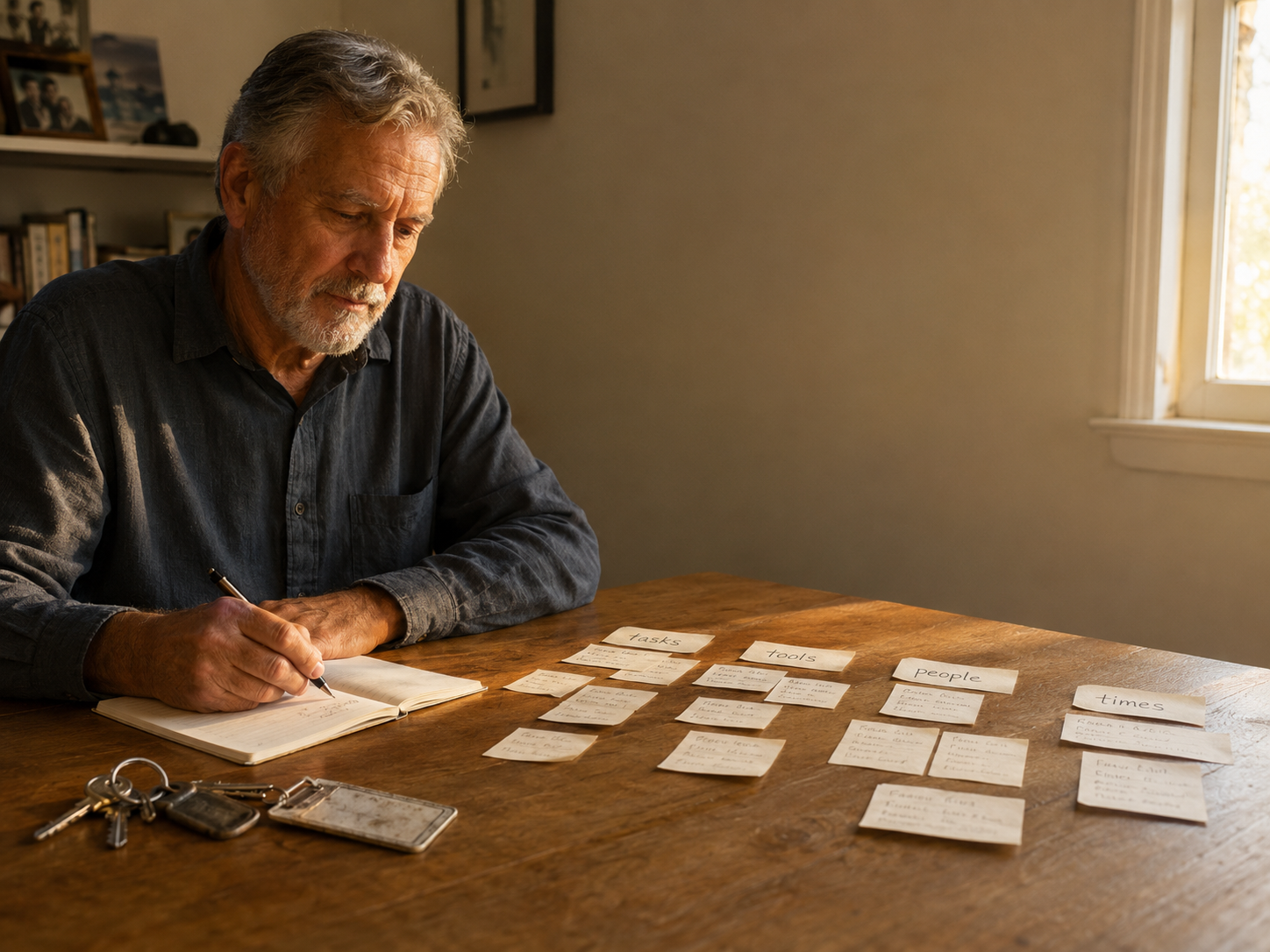
A job title rarely captures the knowledge, routines, language, tools, and relationships that made the work real. This practical memoir guide shows how to preserve a former job by reconstructing one bounded shift instead of summarizing an entire career. Writers begin with the day’s sequence, add tools and workplace vocabulary, restore a few important people, and find the small pressure that turns routine into a scene. The method also explains how to check dates and details, handle remembered dialogue honestly, respect other people’s privacy, and add present-day reflection without forcing a tidy lesson. Questions drawn from authoritative occupational-history and oral-history practices help writers recover what experienced workers often take for granted. The takeaway is simple: choose one shift and show how the work actually moved....

August 29, 2026

Did You Know Alexander Graham Bell Studied Sheep Alongside His Inventions?

Alexander Graham Bell is remembered for the telephone, but archival records reveal another long-running interest: sheep breeding at Beinn Bhreagh, his Nova Scotia estate. Bell sought to increase twin and triplet births, kept detailed tables of ancestry and physical traits, and even copied a 1909 newspaper advertisement offering to buy sheep with six, seven or eight nipples. An 1898 letter to his wife, Mabel, shows him tracing the ancestry and wool of a promising black lamb. The evidence does not turn his hypothesis into a modern scientific conclusion, and Bell’s broader heredity thinking included discredited eugenic ideas. His lesser-known project offers a useful prompt for family history: preserve the interests, records, unfinished experiments and troubling convictions that reveal a whole person—not only the achievement for which someone became known....

One Belief, One Story: Write a Personal Credo
August 26, 2026

One Belief, One Story: Write a Personal Credo

A personal credo turns a large question—“What do I believe?”—into a manageable reflective-writing practice. Choose one principle that genuinely guides part of your life, then ground it in a specific moment when that belief was formed, tested, changed, or put into practice. Separate what happened from what you understand about it now, draft in your natural first-person voice, and read the piece aloud to remove anything that sounds like a speech. The article draws on verified guidance from the This I Believe project and historical context from the Library of Congress. It also encourages honest limits, respect for other people’s privacy, and dating the finished piece so it can remain a truthful snapshot of what mattered to you at this point in your life....

Before Julia Child Became a Chef, She Worked for a Wartime Intelligence Agency
August 15, 2026

Before Julia Child Became a Chef, She Worked for a Wartime Intelligence Agency

Before Julia Child became a celebrated cooking teacher, she served in the Office of Strategic Services, the wartime predecessor of the CIA. Archival records show that Julia McWilliams worked in Washington, Ceylon, and China, handling sensitive communications and supporting emergency rescue research. Her section was connected with experiments on shark repellent, although she did not single-handedly invent it. The deeper surprise is how that chapter redirected her life: overseas service introduced her to new cuisines and to Paul Child, her future husband. The story offers a useful prompt for anyone preserving memories. An old job title often hides unexpected tasks, influential colleagues, meaningful objects, and turning points. Ask what happened before the chapter everyone knows—and save the answer while it can still be told....

Nellie Bly’s Best Detour: Meeting Jules Verne While Racing Around the World
August 15, 2026

Nellie Bly’s Best Detour: Meeting Jules Verne While Racing Around the World

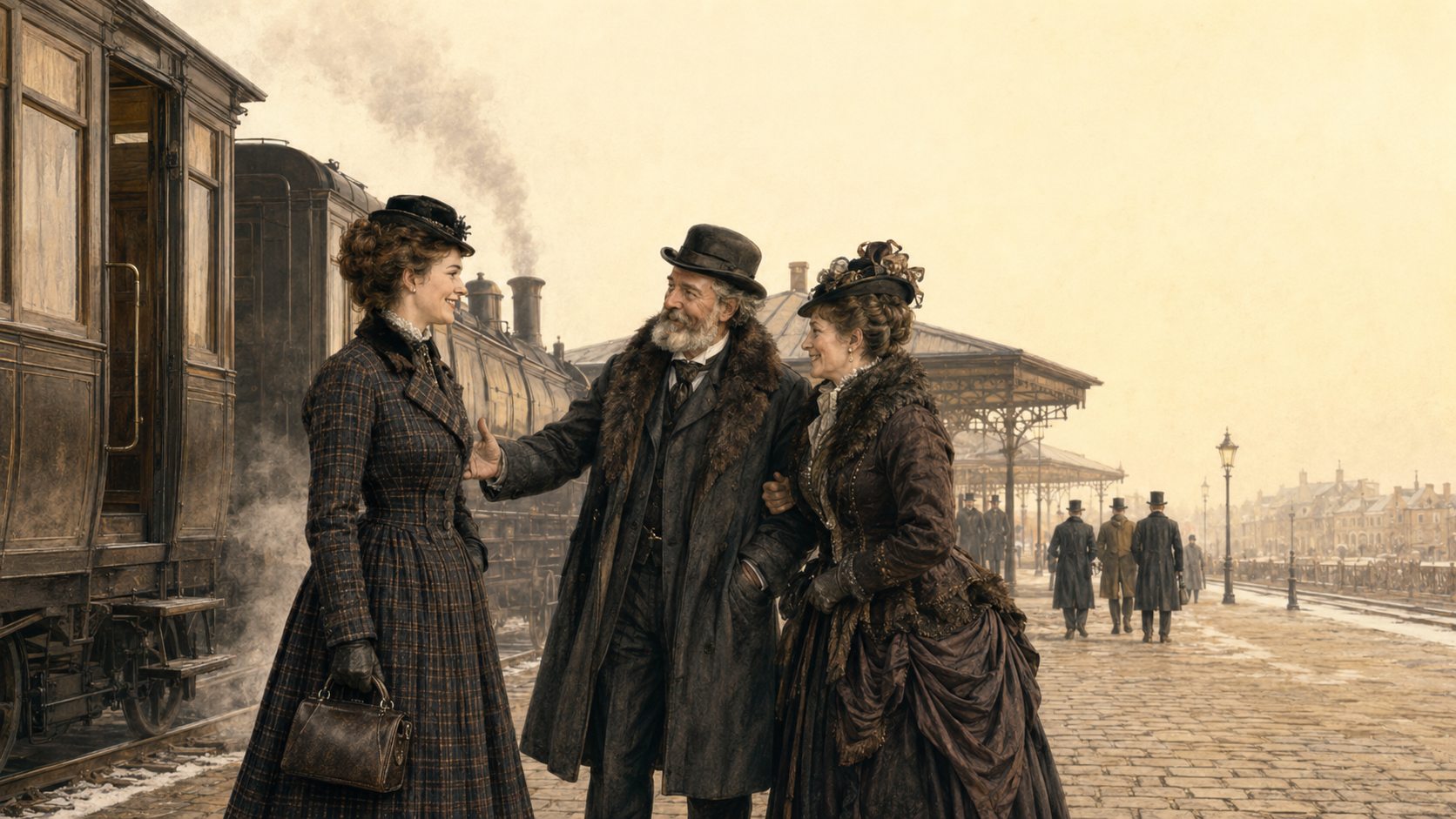
In 1889, journalist Nellie Bly set out to circle the globe faster than the fictional Phileas Fogg. Soon after crossing the Atlantic, she accepted a risky detour to Amiens to meet Jules Verne, whose novel had inspired her journey. Their brief conversation included a playful comparison of her route with Fogg’s—and ended when Bly checked her watch and hurried for the only train that would keep her schedule intact. She completed the journey in 72 days, 6 hours, 11 minutes and 14 seconds. The lasting charm of her account lies not only in that record, but in the human details she preserved. Her example offers a memoir lesson: begin with the official fact, then record the worry, joke, practical problem and choice that reveal what the experience meant....

Need Help?
Hello! How can we assist you today?