Blog

Articles about memoir writing, family stories, and memory preservation.

Write the Shift, Not Just the Job Title
August 31, 2026

Write the Shift, Not Just the Job Title

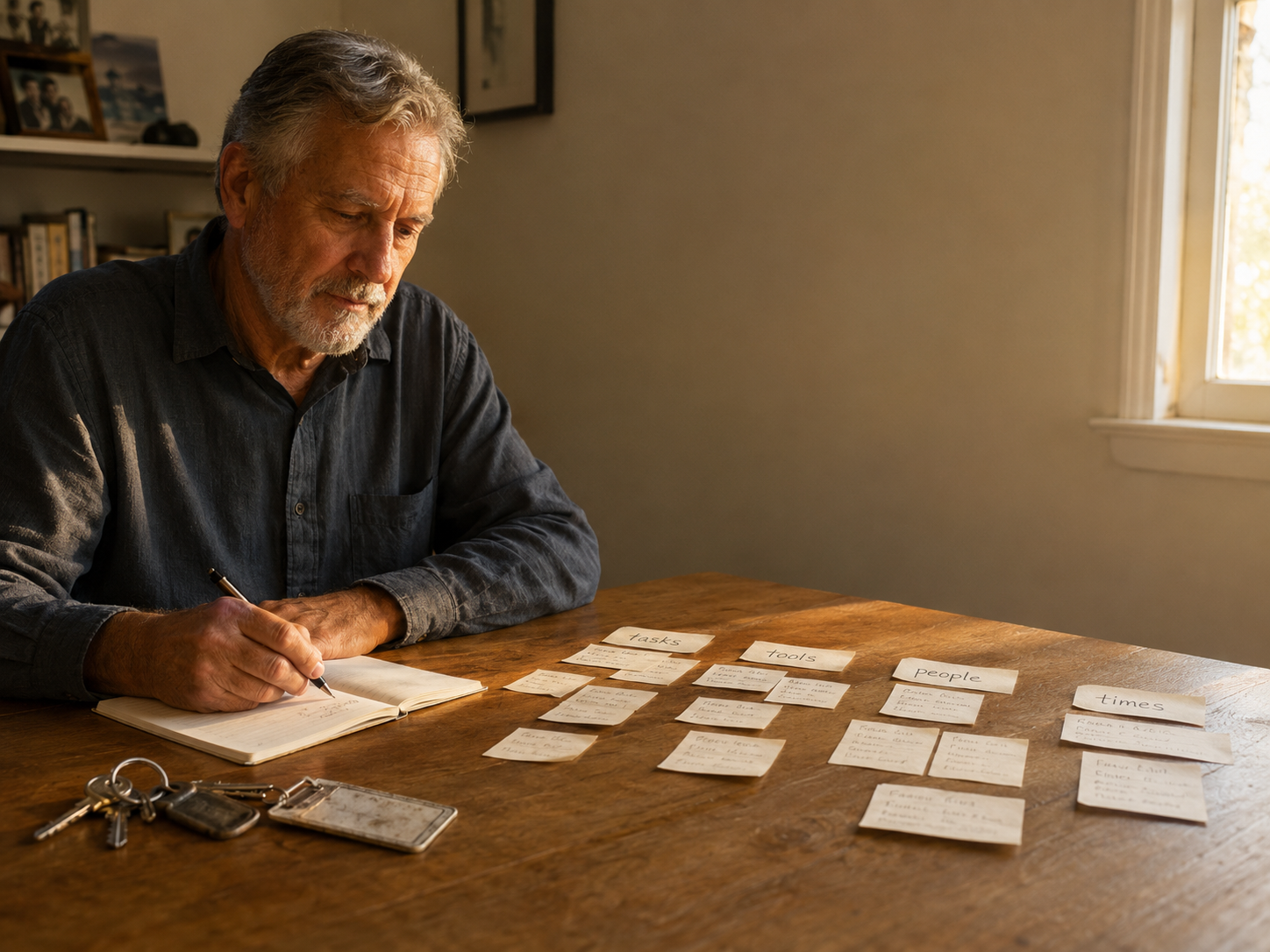
A job title rarely captures the knowledge, routines, language, tools, and relationships that made the work real. This practical memoir guide shows how to preserve a former job by reconstructing one bounded shift instead of summarizing an entire career. Writers begin with the day’s sequence, add tools and workplace vocabulary, restore a few important people, and find the small pressure that turns routine into a scene. The method also explains how to check dates and details, handle remembered dialogue honestly, respect other people’s privacy, and add present-day reflection without forcing a tidy lesson. Questions drawn from authoritative occupational-history and oral-history practices help writers recover what experienced workers often take for granted. The takeaway is simple: choose one shift and show how the work actually moved....


One Belief, One Story: Write a Personal Credo
August 26, 2026

One Belief, One Story: Write a Personal Credo

A personal credo turns a large question—“What do I believe?”—into a manageable reflective-writing practice. Choose one principle that genuinely guides part of your life, then ground it in a specific moment when that belief was formed, tested, changed, or put into practice. Separate what happened from what you understand about it now, draft in your natural first-person voice, and read the piece aloud to remove anything that sounds like a speech. The article draws on verified guidance from the This I Believe project and historical context from the Library of Congress. It also encourages honest limits, respect for other people’s privacy, and dating the finished piece so it can remain a truthful snapshot of what mattered to you at this point in your life....

Map the Place Before You Write the Memory
August 24, 2026

Map the Place Before You Write the Memory

A memory map can make a vague setting easier to write without pretending every recollection is exact. This practical five-step method begins with one bounded place—a home, workplace, garden, block, or familiar route—and asks the writer to sketch it from memory. People, movement, changes, sensory details, and unanswered questions are added next. Historical fire insurance plans, topographic maps, directories, and local archives can then help check the setting, but records should not be mistaken for proof of personal experience. By labelling details as remembered, documented, or uncertain, a memoir writer can preserve both useful evidence and honest doubt. Finally, one route across the map becomes the backbone of a focused scene, from entrance and destination to interruption and exit....

Need Help?
Hello! How can we assist you today?