Blog

Articles about memoir writing, family stories, and memory preservation.

October 15, 2026

Who Taught You to Cook? A Family Story to Share Across Generations

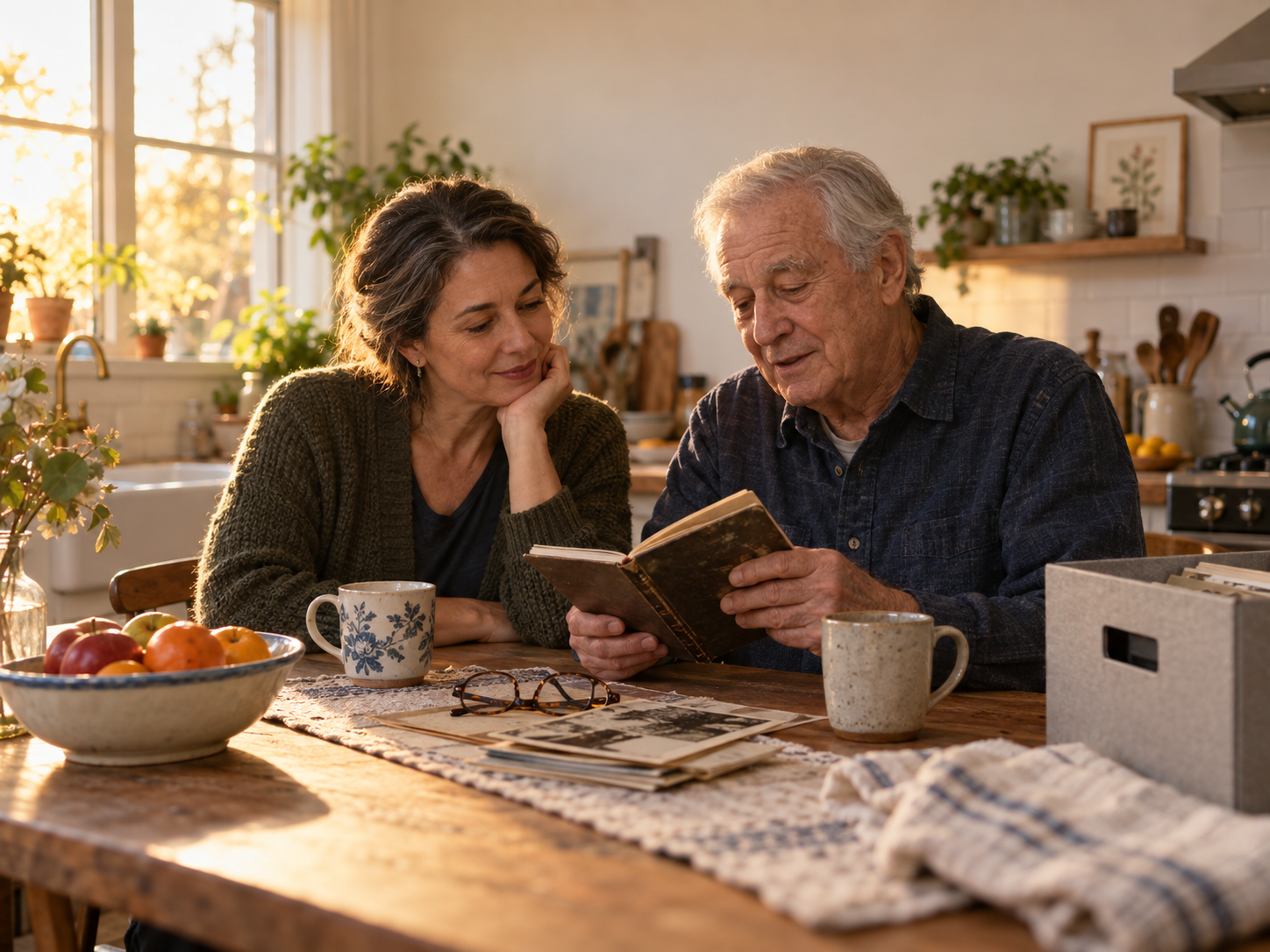
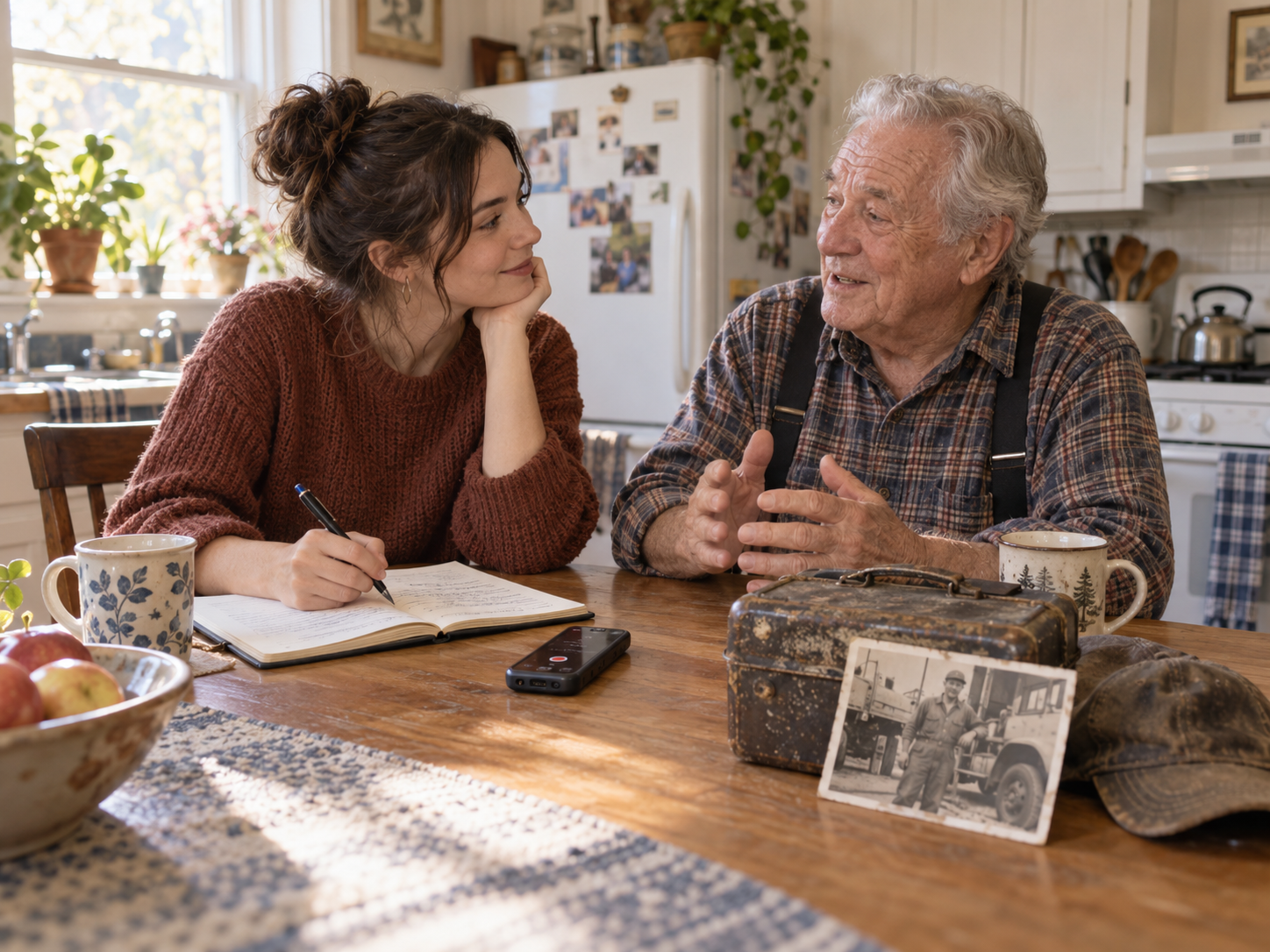
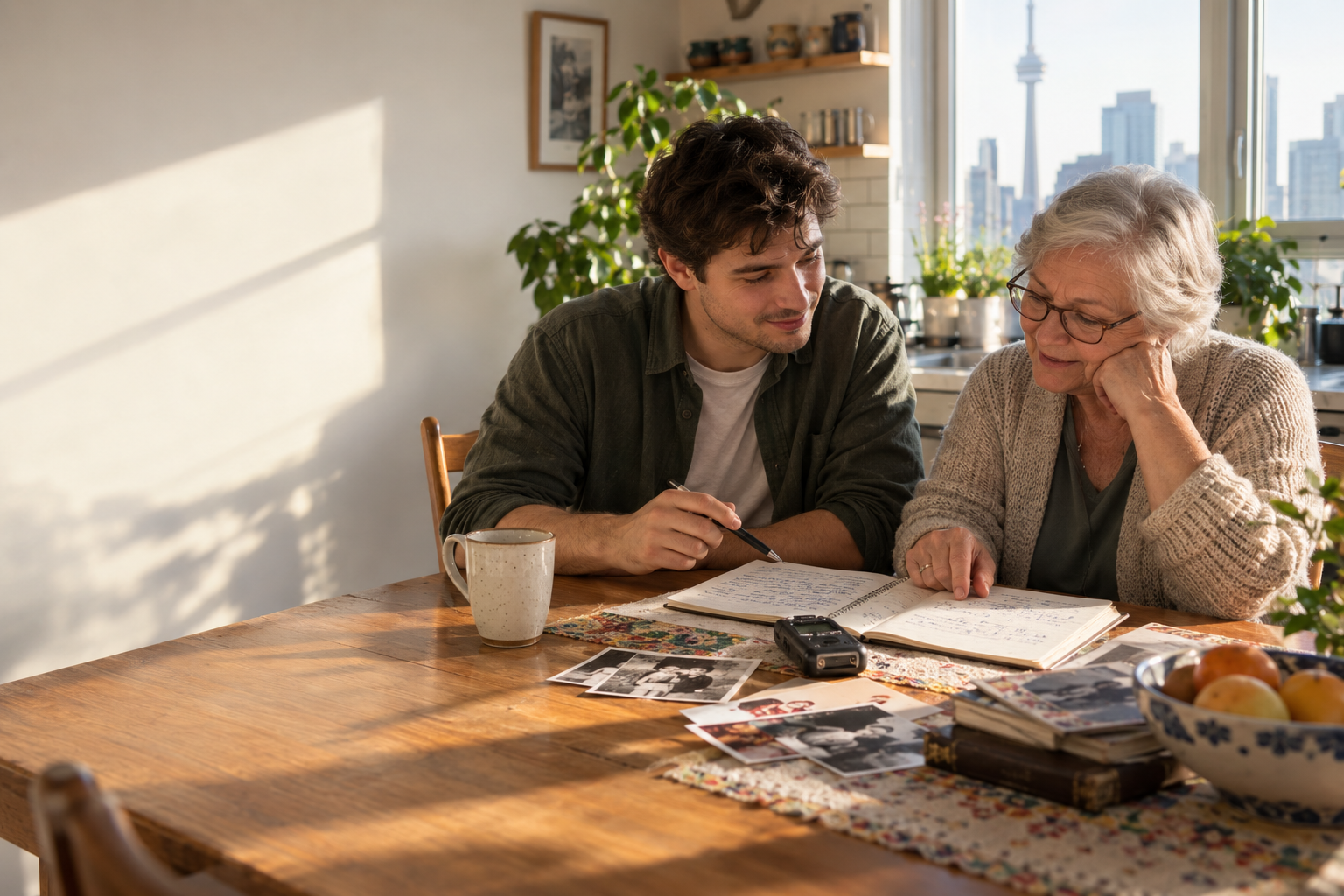
A relative’s first meal cooked for someone else can open a much larger family story. Ask what “first” means to them, who taught them, where the meal happened, what went wrong, and who was waiting to eat. Follow the people and circumstances around the recipe: the kitchen, the tools, the ingredients, the family rules, and the person whose encouragement or criticism still comes to mind. Then answer the same questions yourself so the exchange moves in both directions. Ask permission before recording, explain how the story will be used, and preserve uncertainty instead of guessing at exact dates or words. A short recording, dated note, recipe card, or photo can become a lasting keepsake. The most important ingredient is time spent listening....
What Was School Like Before the Bell? A Two-Generation School-Day Interview
October 08, 2026

What Was School Like Before the Bell? A Two-Generation School-Day Interview

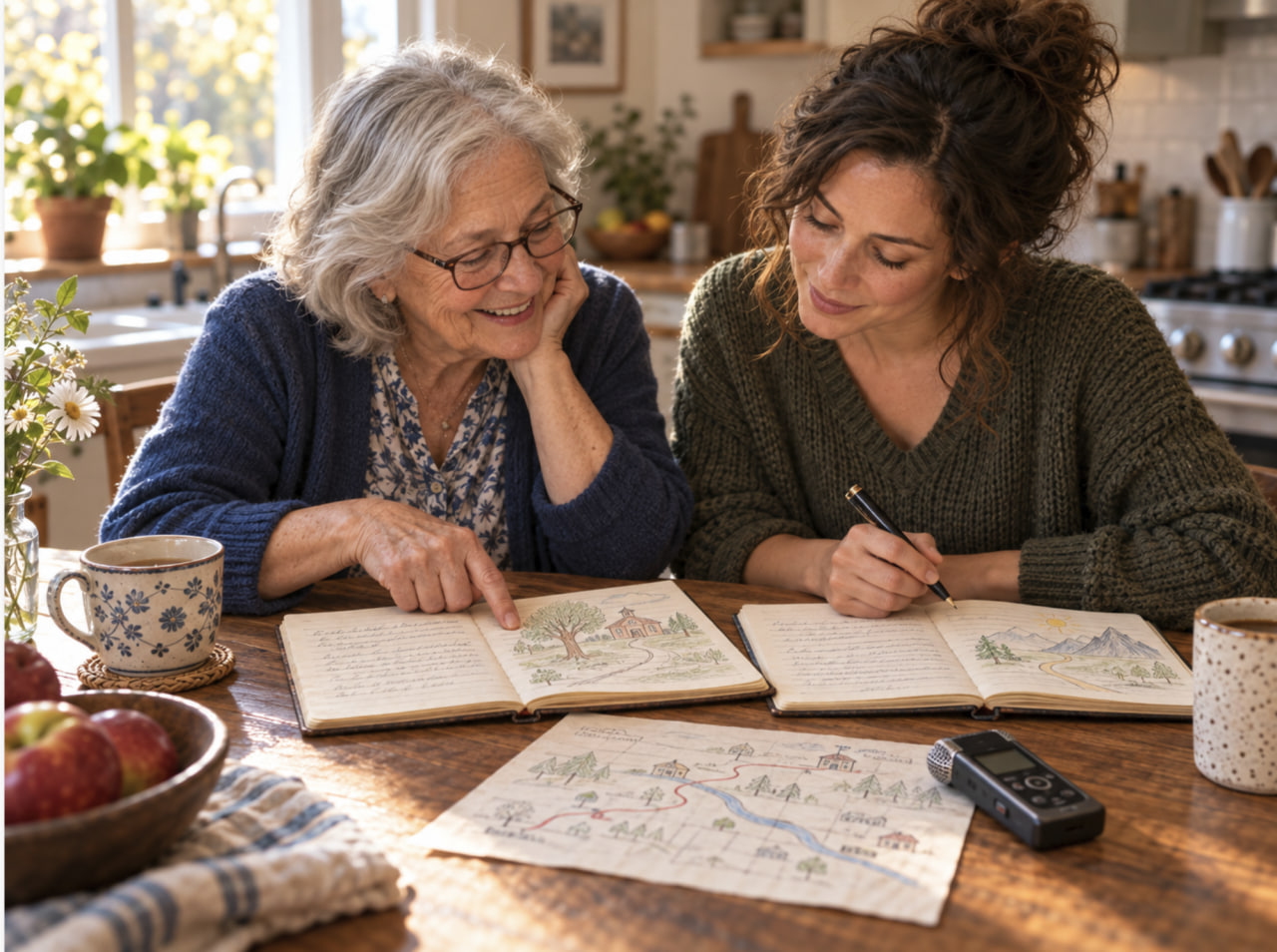
School memories become richer when a family asks about one ordinary day instead of requesting a complete childhood history. This guide offers a two-generation interview built around the journey to school, the objects carried, classroom routines, friendships, and the walk home. Matched questions give both people a turn and keep the conversation specific rather than turning it into a contest between “then” and “now.” Drawing on Smithsonian and oral-history guidance, it recommends consent, open-ended questions, careful labelling of uncertainty, and a review of the final recording or notes by the person who spoke. A Memory Share subscription can make the project a meaningful gift when paired with an hour of listening and recording. The practical takeaway is simple: start before the bell and preserve the ordinary details that official records rarely contain....

When You Remember the Conversation but Not Every Word
October 05, 2026

When You Remember the Conversation but Not Every Word

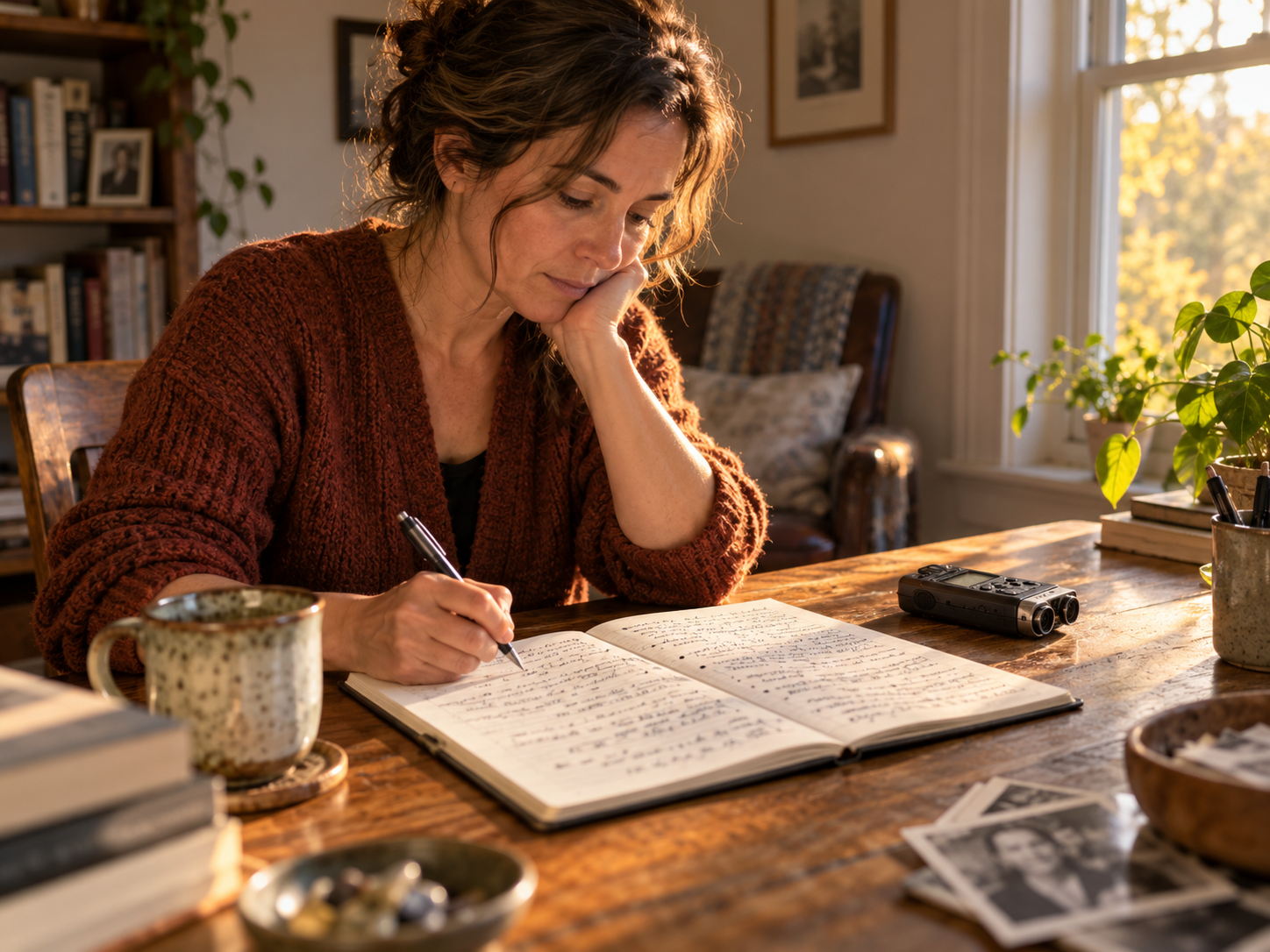
Remembering a family conversation does not require pretending you have a perfect transcript. This guide shows memoir writers how to separate words they recall, meaning they remember, and details they are inferring. It offers practical alternatives to uncertain quotation marks: summary, indirect speech, transparent reconstruction, and concrete actions that happened around the exchange. A four-pass method helps writers inventory the scene, clarify its meaning, choose the right form, and add present-day reflection. The article also explains why consent matters when another person’s private experience enters a memoir, drawing on Smithsonian and Oral History Association guidance. The central takeaway is simple: preserve the emotional and observable truth of the conversation while making uncertainty visible....

Ask About the First Home They Remember
October 01, 2026

Ask About the First Home They Remember

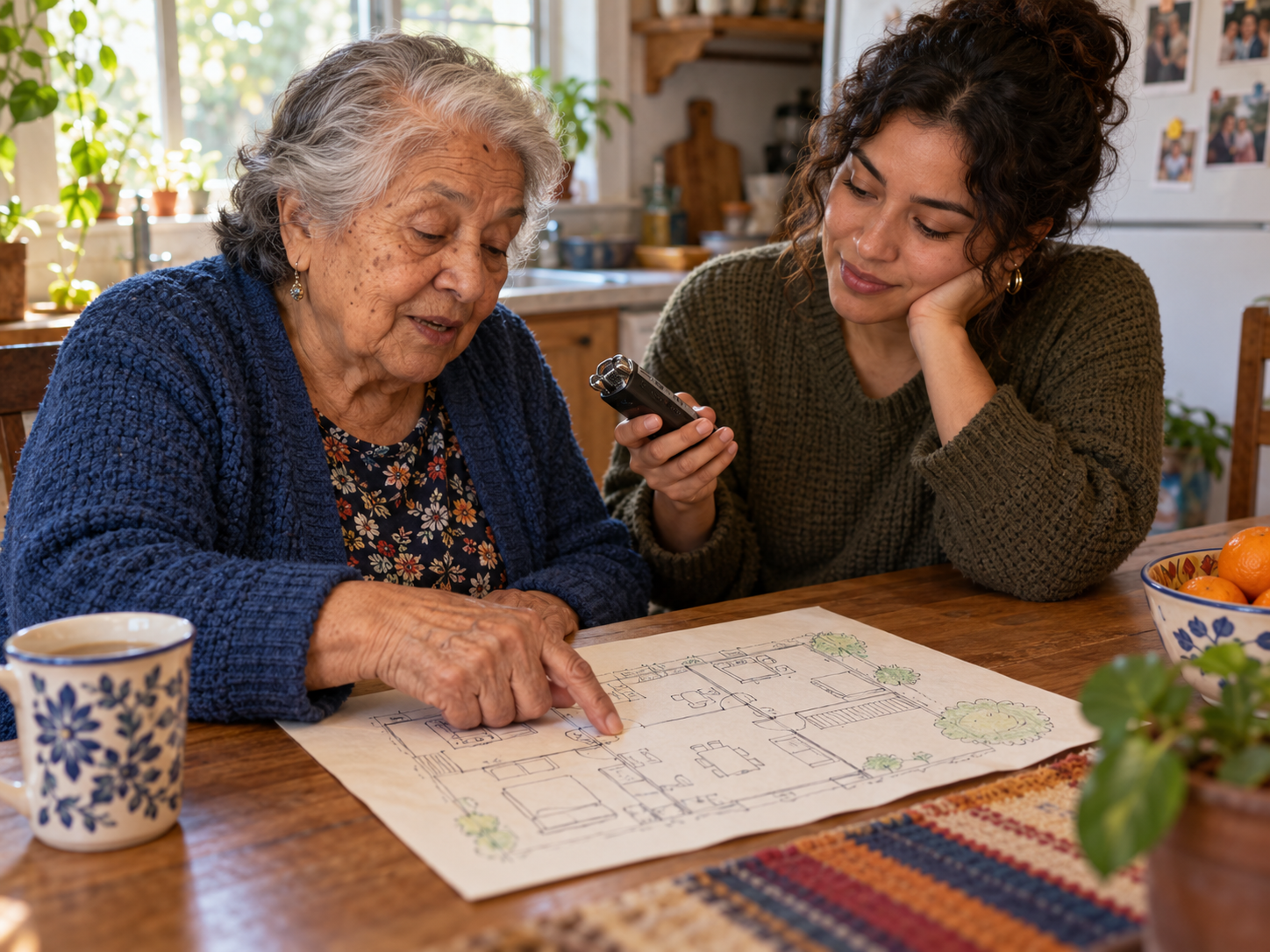
An address is only the beginning of a family home story. Invite an older relative to walk through the first home they remember, room by room, and listen for the ordinary details that official records cannot preserve: routines, sounds, neighbours, shared spaces, household rules, and changes over time. Ask permission before recording, use open-ended questions, and let the storyteller skip anything private. A simple hand-drawn map can accompany the conversation, clearly labelled as remembered rather than measured fact. Keep memories, documents, and uncertainties in separate sections so future readers can understand both the story and its limits. This small two-generation project can become a meaningful gift of attention—and a lasting record of the people and places that made a home....

The Five-Line Memory Ledger: A Small Practice for Saving Ordinary Days
September 30, 2026

The Five-Line Memory Ledger: A Small Practice for Saving Ordinary Days

A family history is built from ordinary details as much as from major milestones. The five-line memory ledger offers a small, repeatable practice: record the date and place, name the people present, capture one concrete detail, describe what happened, and reflect on why it mattered—or what remains uncertain. The method avoids the pressure of writing a polished memoir while preserving useful context for future readers. Honest approximations are welcome, and guesses should be labelled rather than turned into facts. Over time, a collection of short entries can reveal recurring places, routines, relationships, and unanswered questions. Those patterns may become longer memoir scenes or prompts for family conversations. Begin with one ordinary day, write for ten minutes, and let the record grow at its own pace....

Did You Know John F. Kennedy Left Doodles in the Archives?
September 26, 2026

Did You Know John F. Kennedy Left Doodles in the Archives?

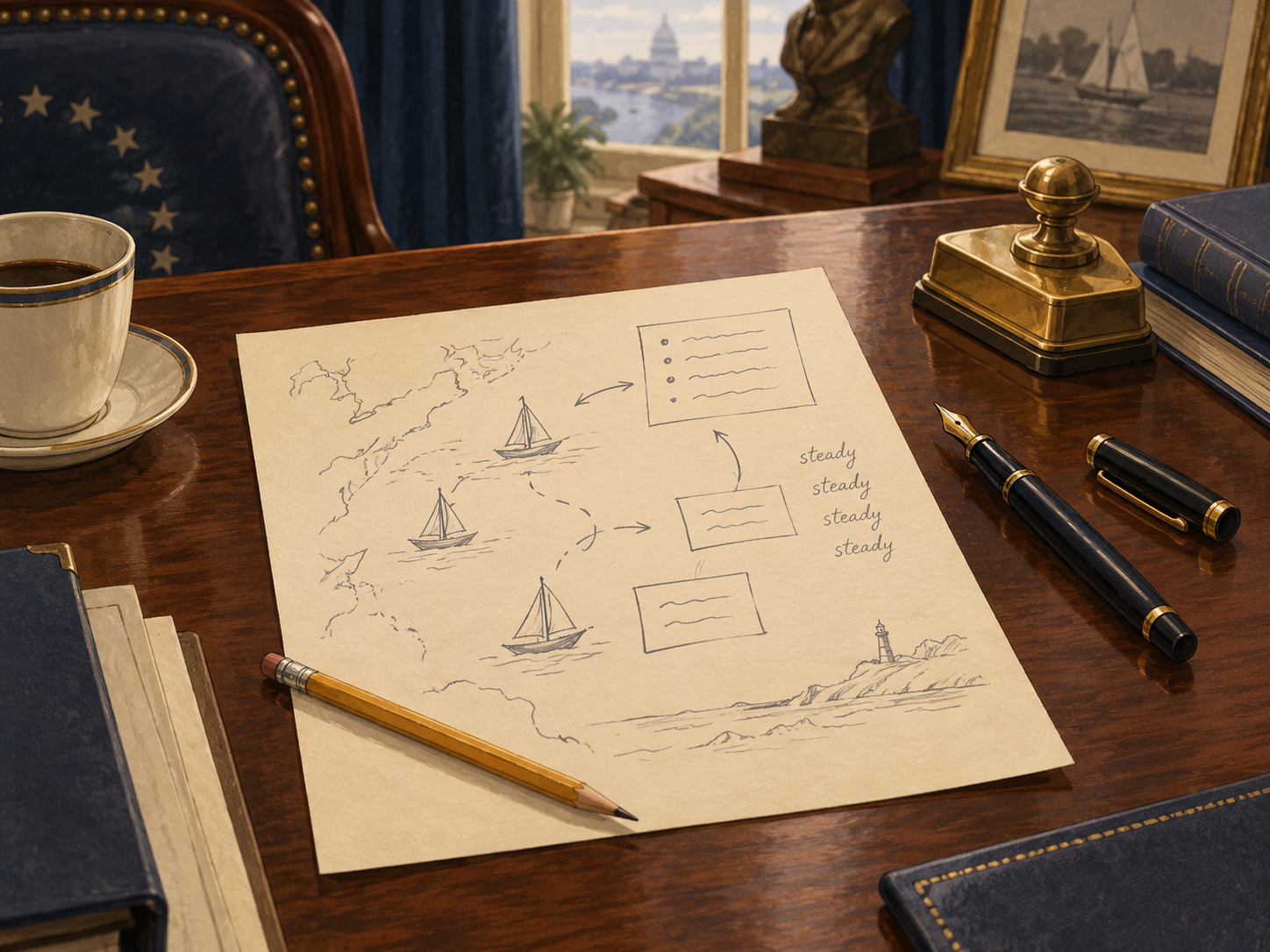
The John F. Kennedy Presidential Library preserves more than one hundred folders of Kennedy’s doodles: boxes, arrows, sailboats, repeated words, and other small marks made alongside the official record. One page from a 1962 cabinet meeting contains the word “cheese” twice. The meeting agenda explains some nearby words, but the archivist says the reason for “cheese” may never be known. That careful uncertainty is the real lesson. When preserving a family note, recipe margin, photograph, or scrap of paper, record what the item shows, add the context that can be supported, and label interpretations as interpretations. An unanswered question can be as valuable as an answer because it invites another relative to contribute. Small traces, honestly described, can make a life more recognizable across generations....

Before the Bus: The Childhood Story Rosa Parks Wrote Down
September 25, 2026

Before the Bus: The Childhood Story Rosa Parks Wrote Down

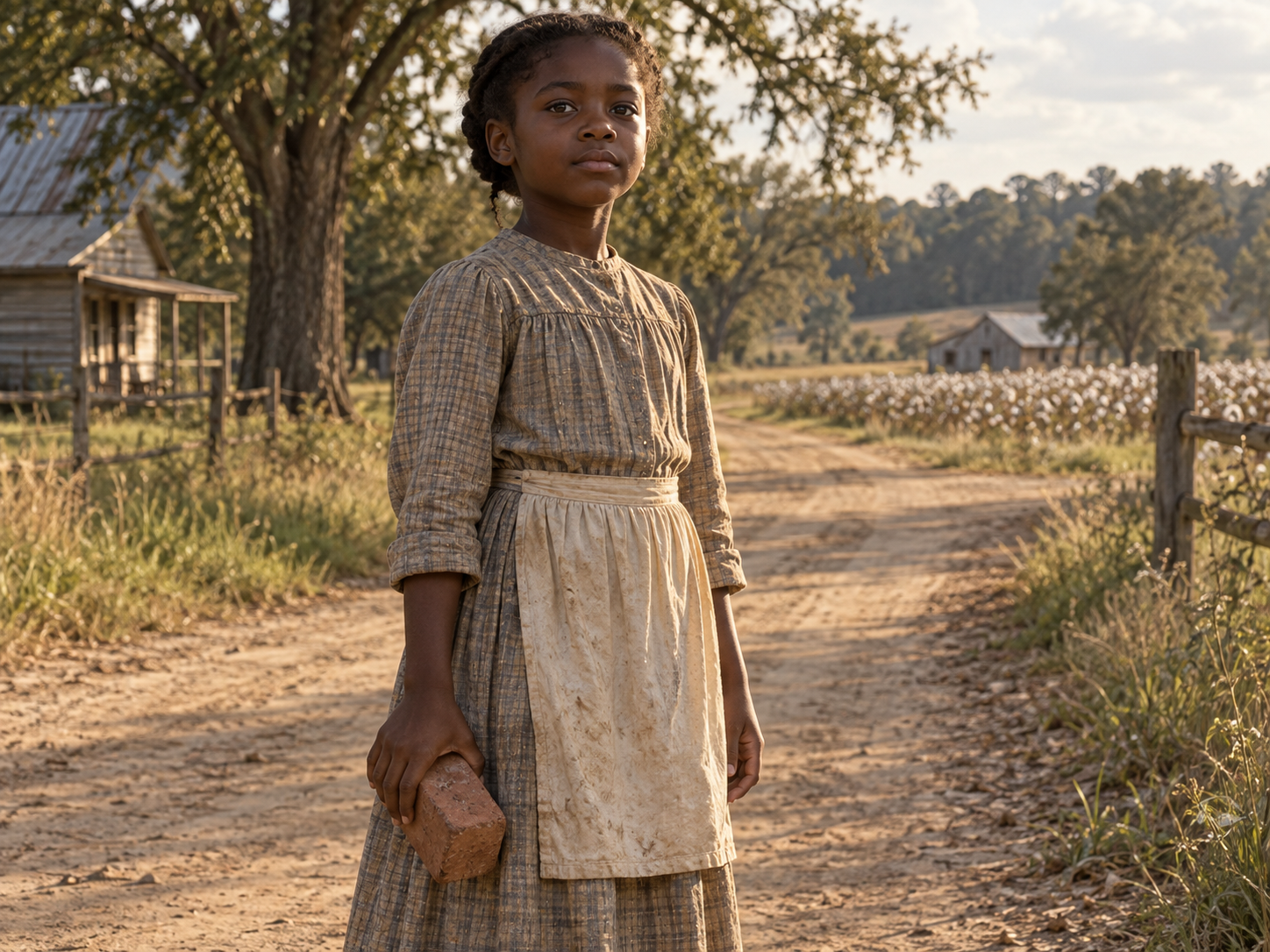
In a later autobiographical manuscript, Rosa Parks recalled a childhood encounter with a white boy who threatened to hit her. She wrote that she picked up a brick and dared him to try; he backed away. The Library of Congress preserves this account and identifies it as a retrospective manuscript, not a contemporaneous report. That distinction makes the story more useful, not less: it shows how a person can preserve an early memory while acknowledging the limits of what later recollection can prove. Parks also connected the moment to her grandfather’s teaching not to accept mistreatment. For family memoirists, the lesson is practical: save the small action, the object, the influential relative, and the source’s date. A vivid scene becomes trustworthy when we distinguish what was witnessed, remembered, inherited, and still uncertain....

Ask About the First Job: The Family Story Behind the Job Title
September 24, 2026

Ask About the First Job: The Family Story Behind the Job Title

Asking a parent or grandparent about a first job can reveal the person behind a familiar family role. A job title leaves out the route to the workplace, the ordinary workday, the people who taught the new worker, the sensory details, the first paycheque, and the lessons that lasted. This guide offers a respectful two-generation interview: ask permission, explain how the recording will be used, invite an open-ended account, follow the people and routines, and separate remembered details from documents and uncertainty. The practical takeaway is simple: choose one relative, set aside a comfortable twenty minutes, and record one first-job story in the speaker’s own voice. A Memory Share subscription can make the invitation easier when it is paired with time, listening, and a promise to review the saved story together....

The Words Our Families Make: Preserve a Living Language Archive
September 10, 2026

The Words Our Families Make: Preserve a Living Language Archive

A family’s history lives not only in dates and photographs, but also in its words: nicknames, sayings, pronunciations, and names for ordinary things. This guide offers a short, two-generation conversation for preserving those details as sound and story. Choose five to ten words, ask permission before recording, and let the relative decide what remains private and who may hear it. Capture each word naturally and slowly, then add the meaning, people, places, and memories attached to it. Invite the younger participant to contribute words and interpretations too, so the archive has more than one perspective. Keep the original audio, add clear context, and review the record together. A small language archive can become a warm, continuing family project....

Need Help?
Hello! How can we assist you today?