Blog

Articles about memoir writing, family stories, and memory preservation.

Build a Reading-Memory Journal, One Book at a Time
September 02, 2026

Build a Reading-Memory Journal, One Book at a Time

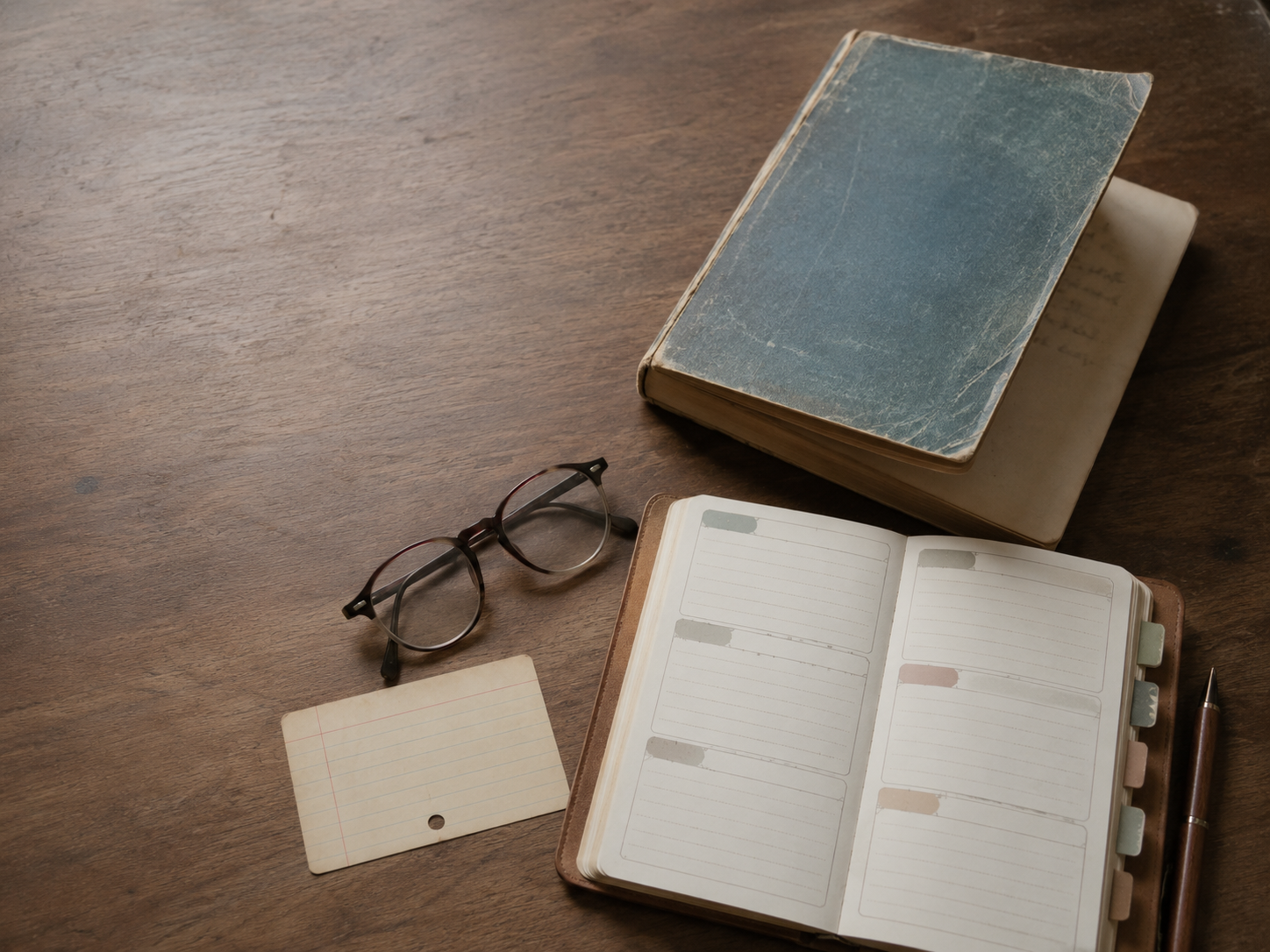
A remembered book can preserve far more than a plot. It may carry the room where you read, the person who lent it, the life question you were facing, and the ways your understanding later changed. This article adapts the old practice of keeping a commonplace book into a simple reading-memory journal. Choose one book with a life attached, then record how it reached you, who you were at the time, where you read, what stayed with you, what you see differently now, and which related memory should come next. Historical collections at Harvard, the British Library, and the Library of Congress show how readers’ selections and notes can reveal personal interests and habits of thought. The practical goal is modest: one book, one page, and one honest glimpse of the reader you once were....


One Belief, One Story: Write a Personal Credo
August 26, 2026

One Belief, One Story: Write a Personal Credo

A personal credo turns a large question—“What do I believe?”—into a manageable reflective-writing practice. Choose one principle that genuinely guides part of your life, then ground it in a specific moment when that belief was formed, tested, changed, or put into practice. Separate what happened from what you understand about it now, draft in your natural first-person voice, and read the piece aloud to remove anything that sounds like a speech. The article draws on verified guidance from the This I Believe project and historical context from the Library of Congress. It also encourages honest limits, respect for other people’s privacy, and dating the finished piece so it can remain a truthful snapshot of what mattered to you at this point in your life....

An Ordinary Day Is Worth Writing Down
August 19, 2026

An Ordinary Day Is Worth Writing Down

Milestones are easy to label as important, but the routines and small variations of ordinary life are often what families later struggle to reconstruct. This article offers a five-minute journal method for preserving one everyday event without turning daily writing into homework. Add a date and useful title, anchor the moment with what, who, where, and when, notice one detail that differed from the usual pattern, and finish with one sentence of reflection. Guidance from the Library of Congress and Smithsonian Institution Archives shows why diaries’ mundane details can become meaningful records. Diary research also supports the practical value of concrete event cues, while a recent study suggests that small elements of novelty within familiar life may be especially memorable. The method makes no health promises; it simply helps today’s ordinary details remain available for tomorrow’s stories....

Need Help?
Hello! How can we assist you today?