Blog

Articles about memoir writing, family stories, and memory preservation.

Map the Place Before You Write the Memory
August 24, 2026

Map the Place Before You Write the Memory

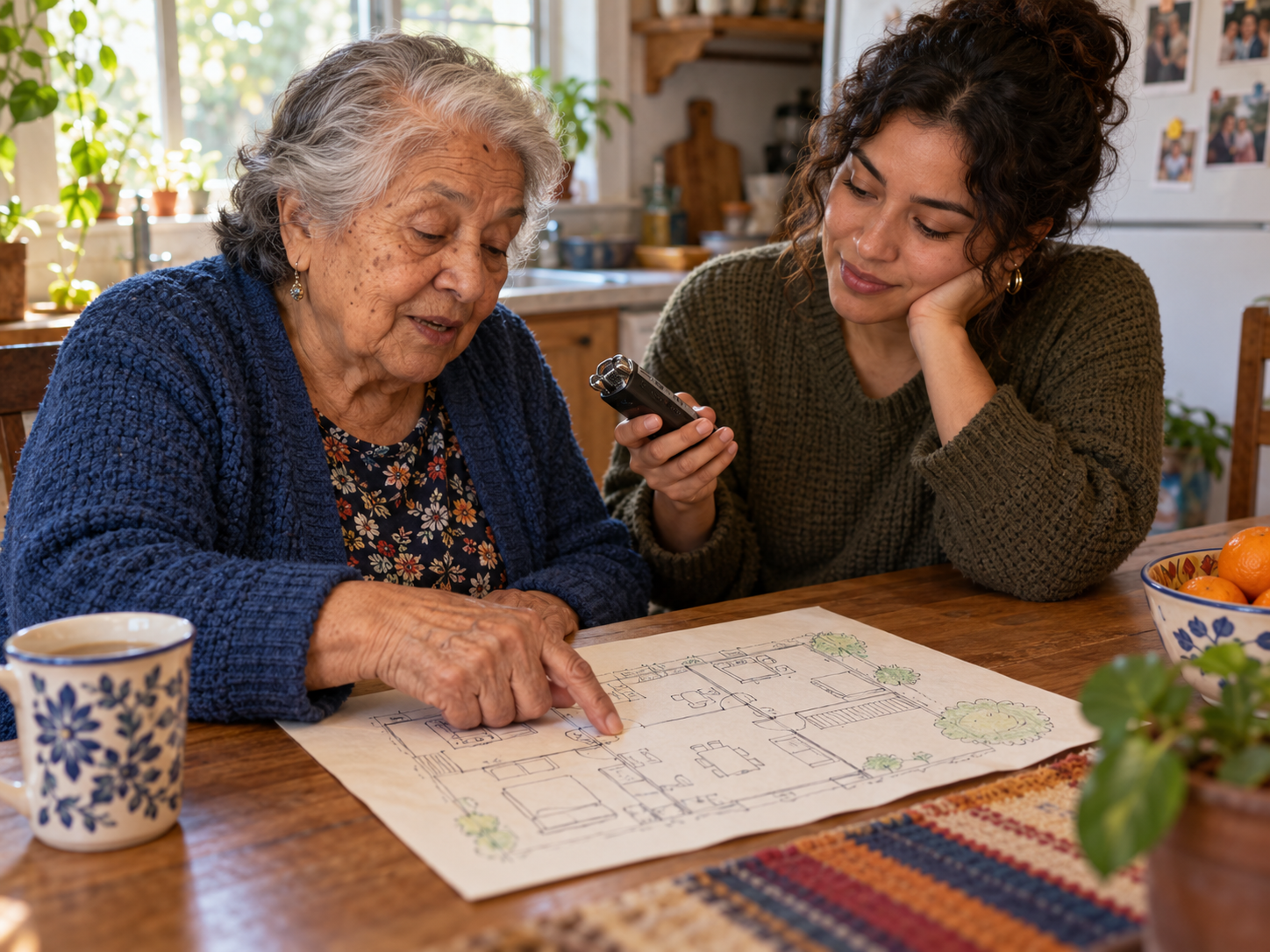
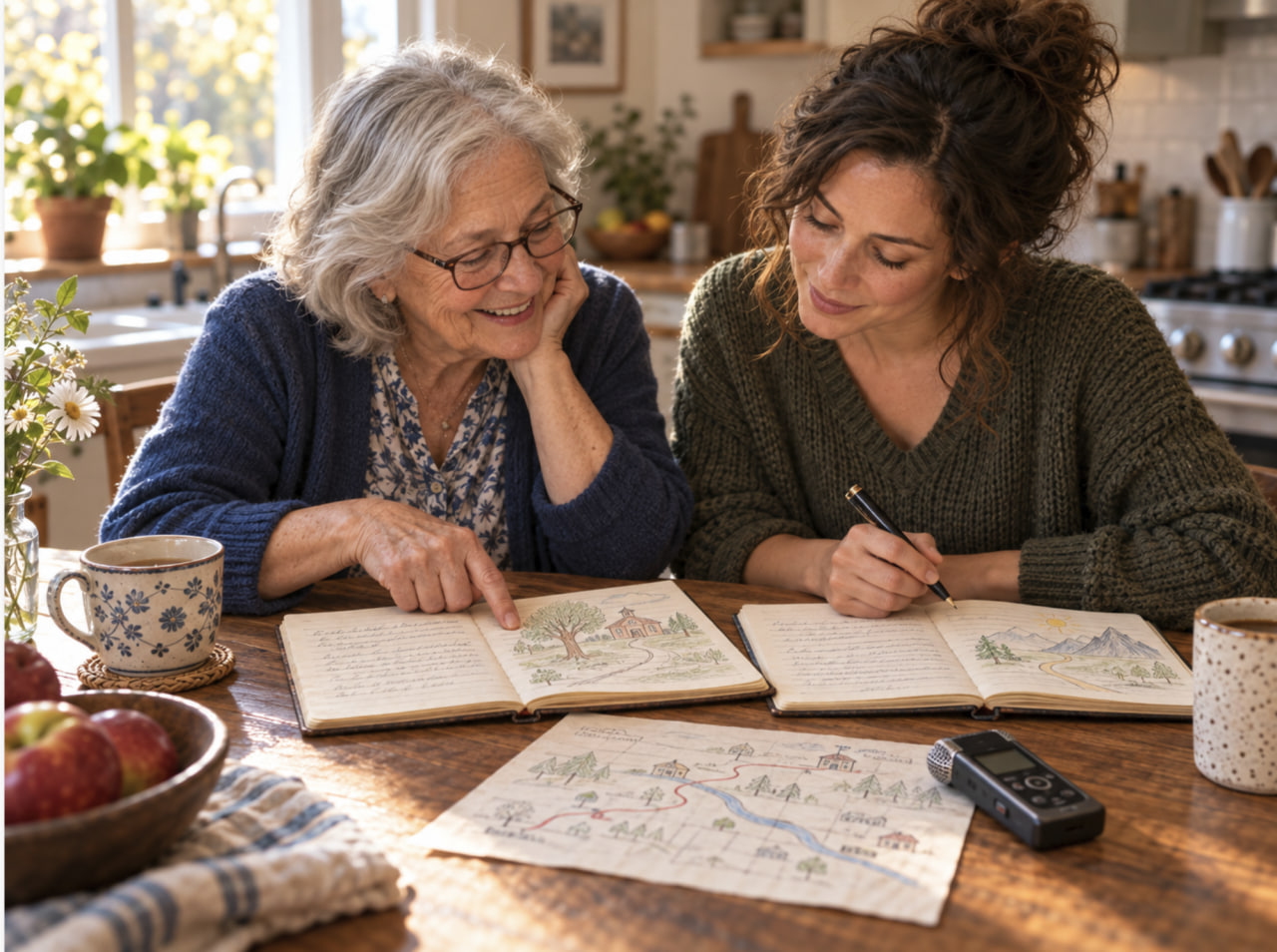
A memory map can make a vague setting easier to write without pretending every recollection is exact. This practical five-step method begins with one bounded place—a home, workplace, garden, block, or familiar route—and asks the writer to sketch it from memory. People, movement, changes, sensory details, and unanswered questions are added next. Historical fire insurance plans, topographic maps, directories, and local archives can then help check the setting, but records should not be mistaken for proof of personal experience. By labelling details as remembered, documented, or uncertain, a memoir writer can preserve both useful evidence and honest doubt. Finally, one route across the map becomes the backbone of a focused scene, from entrance and destination to interruption and exit....

The Secret Journal Beatrix Potter Could No Longer Read
August 23, 2026

The Secret Journal Beatrix Potter Could No Longer Read

Before Beatrix Potter became famous for Peter Rabbit, she kept a private journal in a cipher built from substituted letters, characters from several alphabets, and number shortcuts. She eventually became unable to read her own coded writing, and no key survived. Beginning in 1952, engineer and Potter scholar Leslie Linder spent six years deciphering it. A reference to Louis XVI and the year 1793 finally gave him the clue he needed. The recovered pages revealed Potter’s humour, daily observations, artistic development, scientific interests, and attachment to the Lake District. Even an American gingerbread recipe appeared among coded scraps later studied by the National Trust. The story offers a light reminder for today’s memory keepers: protect your privacy, but leave enough names, dates, explanations, and instructions for future readers to understand what you choose to preserve....

Did You Know George Washington Ran a Major Whiskey Distillery?
August 22, 2026

Did You Know George Washington Ran a Major Whiskey Distillery?

George Washington’s retirement included a surprising business chapter: a commercial whiskey distillery at Mount Vernon. His letters show that farm manager James Anderson proposed the venture in 1797 and that Washington approved a small trial before expanding it. By 1799, estate records listed sales totalling 10,942 gallons. The full story, however, extends beyond the famous owner. Anderson supplied crucial expertise, while enslaved distillers Hanson, Peter, Nat, Daniel, James, and Timothy performed hot and exhausting work. A surviving ledger, contemporary correspondence, archaeology, and reconstruction help separate evidence from legend. The practical takeaway for family historians is to look beyond familiar job titles. Letters, receipts, ledgers, tools, and other ordinary records may reveal a late-life experiment—and the overlooked people who made it possible....

The Other Franklin Kite Story: A Boy, a Pond, and a Lift
August 21, 2026

The Other Franklin Kite Story: A Boy, a Pond, and a Lift

Long before Benjamin Franklin’s famous electrical kite experiment, he recalled trying another use for a kite: letting it pull him across a broad pond while he floated on his back. Another boy carried Franklin’s clothes around to the far shore, and Franklin adjusted his speed whenever the kite began to dip. His account ends with a dry suggestion that a packet boat was still the better way to cross from Dover to Calais. The story is well documented as Franklin’s later recollection and supported by an authoritative National Park Service history. It also offers a lesson for preserving family stories: attribute remembered events honestly, keep the small practical details that make a scene vivid, and never invent names, dialogue or certainty to fill a gap....

Meet Your Relative at the Same Age: A Two-Way Family Conversation
August 20, 2026

Meet Your Relative at the Same Age: A Two-Way Family Conversation

A relative can feel permanently fixed in a family role: parent, grandparent, aunt, or uncle. A same-age conversation offers a different view. Choose an age both people have lived through, then take turns answering matched questions about an ordinary morning, work or study, friendships, uncertainty, and hopes for the future. The method replaces broad claims about “your generation” with specific scenes and gives both participants a voice. This article explains how to ask permission, use open-ended follow-ups, respect private subjects, distinguish remembered experience from verified facts, and save enough context for future listeners. The practical takeaway is simple: begin with one age, five questions, and two storytellers. When a Memory Share subscription is given with time and help, it can feel less like homework and more like a genuine gift of attention....

An Ordinary Day Is Worth Writing Down
August 19, 2026

An Ordinary Day Is Worth Writing Down

Milestones are easy to label as important, but the routines and small variations of ordinary life are often what families later struggle to reconstruct. This article offers a five-minute journal method for preserving one everyday event without turning daily writing into homework. Add a date and useful title, anchor the moment with what, who, where, and when, notice one detail that differed from the usual pattern, and finish with one sentence of reflection. Guidance from the Library of Congress and Smithsonian Institution Archives shows why diaries’ mundane details can become meaningful records. Diary research also supports the practical value of concrete event cues, while a recent study suggests that small elements of novelty within familiar life may be especially memorable. The method makes no health promises; it simply helps today’s ordinary details remain available for tomorrow’s stories....

When Stickeen Crossed the Ice: John Muir’s Unforgettable Little Companion
August 18, 2026

When Stickeen Crossed the Ice: John Muir’s Unforgettable Little Companion

In 1880, naturalist John Muir crossed an Alaskan glacier with an unexpected companion: Stickeen, a small dog who refused to remain at camp. Muir later described how the pair navigated worsening weather and deep crevasses until Stickeen faced a narrow ice bridge that finally stopped him. The dog crossed only after visible hesitation—and then burst into an unforgettable display of motion and relief. The historical journey is documented, while the dramatic detail comes from Muir’s retrospective first-person account and surviving notebook. His story offers a practical memoir lesson: establish the facts, attribute remembered details clearly, and look for the physical gesture that reveals an emotional turning point. A family story becomes vivid not merely when we record what happened, but when we preserve the small action that changed how we understood someone....

Your Life Is Not a List: Build a Memoir Around Turning Points
August 17, 2026

Your Life Is Not a List: Build a Memoir Around Turning Points

A life timeline is useful, but it is not yet a memoir. This practical guide offers a two-pass method for turning chronology into a story with direction. First, make a simple factual timeline using names, dates, places, relationships, and broad life periods. Then identify moments after which something changed: a belief, decision, relationship, or sense of home. Choose three to five connected turning points, give each one a scene card, and test different arrangements before drafting. The article also explains how to handle remembered dialogue, uncertain dates, and conflicting family accounts honestly. Instead of trying to write an entire life from birth onward, begin with one vivid doorway into the larger story—and let the timeline remain the helpful scaffolding behind it....

Before Group Chats, Friends Left Notes in Autograph Albums
August 16, 2026

Before Group Chats, Friends Left Notes in Autograph Albums

Before social feeds and group chats, friendship and autograph albums let many people build one keepsake together. Archival examples preserve signatures, dates, poems, advice, drawings, and the occasional playful contribution from friends, classmates, relatives, visitors, and suitors. Their charm also reveals a problem: a surviving name may mean little once nobody remembers the relationship behind it. If your family has an old autograph book, yearbook, guest book, or signed programme, record who the contributors were and how they knew the owner. Or revive the custom at a gathering by inviting everyone to add one dated page—a saying, sketch, memory, or useful piece of advice—then preserve the story behind each contribution....

Need Help?
Hello! How can we assist you today?