Cook It Once, Keep It Longer: Record a Family Recipe Together
A family recipe is more than ingredients and temperatures. It also lives in a cook’s movements, sensory cues, substitutions, memories, and relationships. This practical guide shows two generations how to preserve one dish together without turning the occasion into a demanding interview. Ask permission, record one comfortable cooking session, note what the mixture should look or feel like, and clarify quantities afterward. Add the story of who made the dish, when it appeared, how it changed, and which details remain uncertain. Keep alternate family versions rather than declaring one the winner. The finished record can combine numbered steps, photographs, a short narrative, and the original audio or video. A Memory Share subscription becomes especially meaningful when it comes with the gift of time: an offer to cook, listen, record, and review the story together.
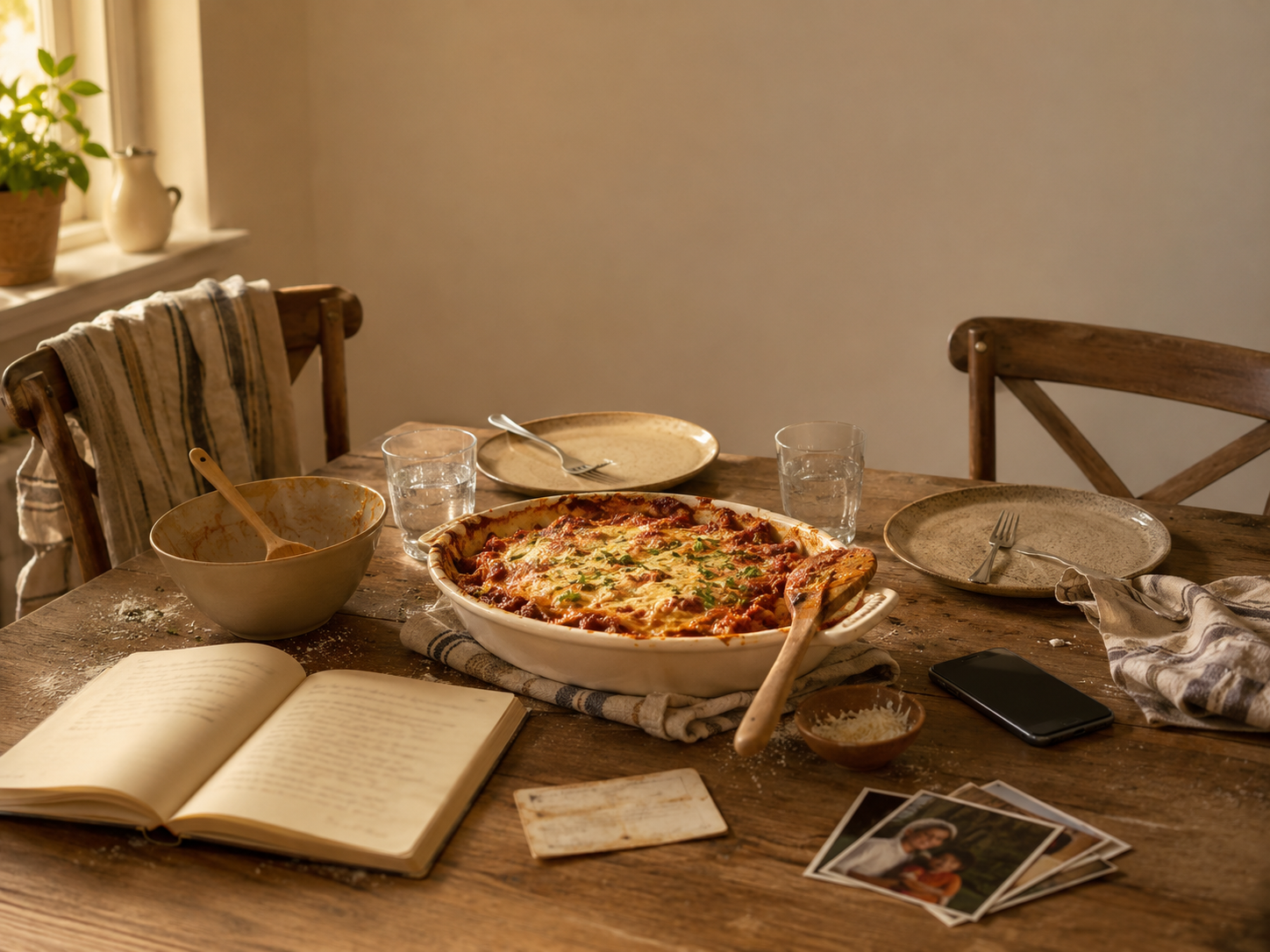
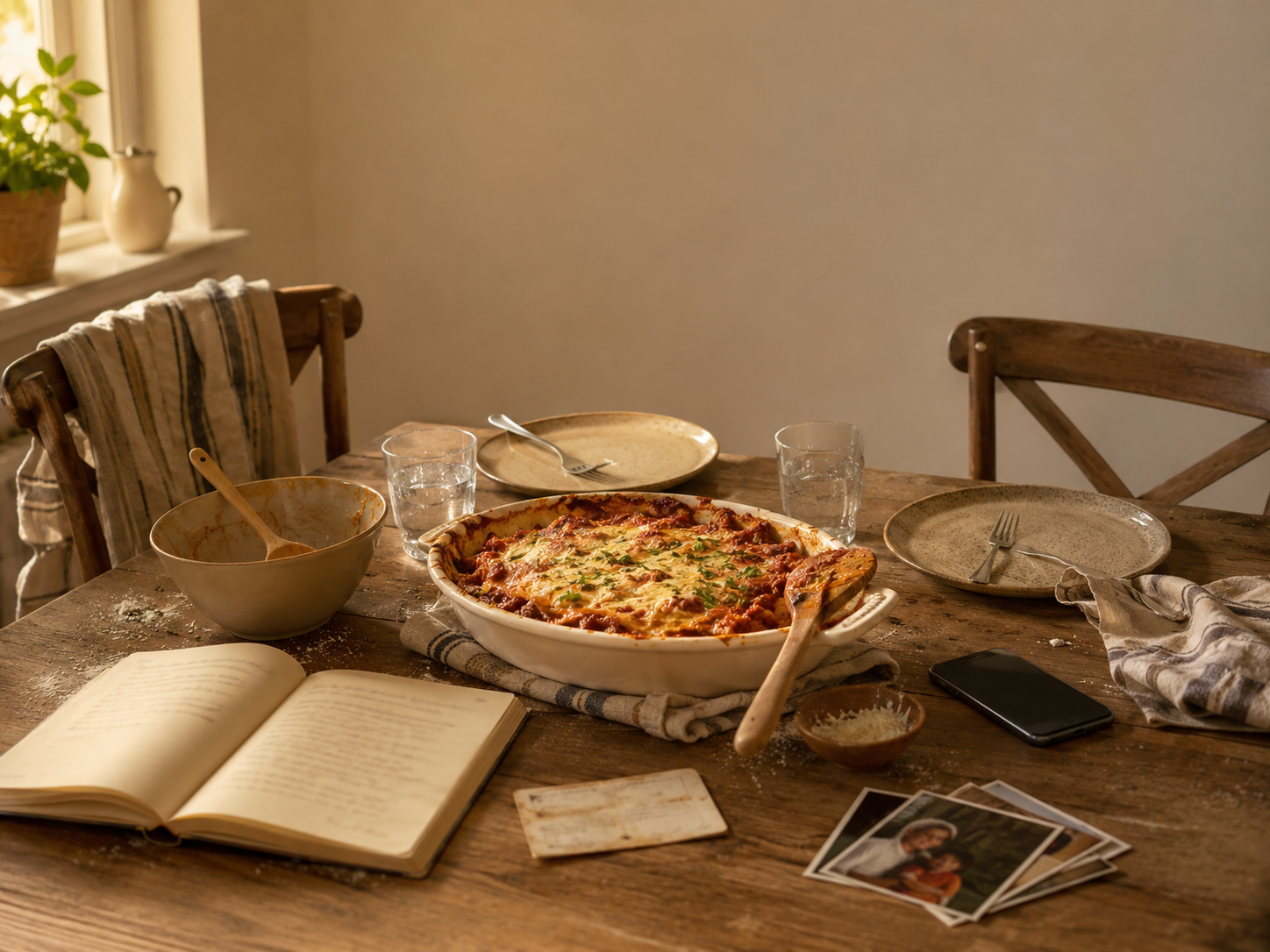
A family recipe can look complete on paper and still leave the next cook stranded.
“Mix until ready” made perfect sense to the person who wrote it. So did “a little flour,” “the usual pan,” and “cook until it smells right.” The instructions were never meant to stand alone. They belonged to a kitchen where someone demonstrated the texture, knew which spoon “a spoonful” meant, and could spot the right colour from across the room.
That is why preserving a family dish is an ideal project for two generations. One person brings experience; the other brings attention, questions, and perhaps a phone for recording. Together, they can save not only a list of ingredients but a small working portrait of family life: who made the dish, when it appeared, how it changed, and what everybody did while it cooked.
A recipe is technique plus memory
The Smithsonian’s suggested oral-history questions treat foodways as part of family tradition. They encourage interviewers to ask which recipes have crossed generations, how ingredients have changed, who prepares special foods, and which stories belong to the preparation. That guidance points to an important distinction: the recipe and the story support each other, but neither replaces the other. The Smithsonian’s question list gives families a strong starting point.
Written instructions tell a future cook what to attempt. A recorded demonstration captures the movements that are difficult to summarize: how firmly the dough is handled, how thinly something is sliced, when the heat is lowered, or what “golden” means in this particular kitchen.
Conversation adds another layer. Perhaps the original ingredient was unavailable after a move to a new country. Perhaps a large celebration dish became a smaller weeknight meal. Perhaps one sibling loved it and another hid it under a napkin. Such details explain why a recipe matters—and remind us that family tradition is usually a history of adaptation, not a museum display sealed behind glass.
Choose one dish, not the whole cookbook
Trying to preserve every family recipe in one weekend is a reliable way to exhaust everyone before the onions are chopped. Begin with one dish that is manageable and meaningful.
It need not be elaborate. A soup, sandwich, pancake, pickle, tea, sauce, or Sunday breakfast may hold more family history than a ceremonial showpiece. Ask the experienced cook which dish they would most like someone else to know. That question gives them agency and may produce a more surprising answer than “What is our most important recipe?”
Then agree on the scope. You are documenting one cooking session and one person’s present method. Other relatives may use different quantities or remember a different origin. Leave room for those versions instead of appointing a winner.
The Library of Congress offers practical advice for collecting family recipes: old instructions may not use modern measurements or temperatures, and handwritten asides can preserve personality as well as useful corrections. It also suggests organizing contributions and including family anecdotes. Its family-recipe guide is a helpful reminder that even a note such as “bake longer” belongs to the evidence trail.
Before cooking, ask permission
A warm project still needs clear consent. Ask whether the cook is comfortable being recorded, photographed, or quoted. Explain who may see the finished story. A recording intended for three relatives is not automatically permission to post it publicly.
Also ask about boundaries. Food stories can touch migration, money, religion, grief, family conflict, or someone who is no longer living. Let the storyteller skip a question, pause the recording, or keep a section private. If children or other relatives appear, get the appropriate permission before sharing their names or images.
This preparation does not make the session stiff. It creates trust, which usually makes the conversation easier.
Record the kitchen in two passes
Use a simple two-pass method: cook first, clarify second.
During the cooking pass, let the experienced person work at a comfortable pace. The younger relative can take brief notes, photograph important stages with permission, and record audio or video if agreed. Avoid interrupting every movement to demand an exact quantity. If the cook measures in their palm, cup the ingredient into a standard measure afterward and note that the number is an estimate.
Watch for details a conventional recipe misses:
- Which pan, bowl, or tool is preferred, and why?
- What does the mixture look, smell, sound, or feel like when it is ready?
- Which step can be prepared ahead?
- What commonly goes wrong?
- Which ingredient has changed over time?
- Who usually helps, tastes, serves, or cleans up?
During the clarification pass, sit down while the experience is fresh. Read back the ingredients and steps. Ask the cook to correct them. Mark estimates honestly: “about 250 millilitres,” “10 to 12 minutes in this oven,” or “enough water to make a soft dough.” Precision is useful, but false precision is not.
Then ask a few story questions: Who taught you? When did you first make it alone? Was it everyday food or celebration food? Did the recipe travel from another town or country? What substitution became permanent? Whom do you picture when you make it?
If you recently tried a same-age family conversation, adapt that two-way spirit here. The younger person can answer too: When did you first taste this dish? What part of the lesson surprised you? What would you change when you make it? A tradition becomes more durable when the exchange is mutual rather than an interrogation.
Preserve uncertainty and variation
Family recipes attract confident origin stories. “Your great-grandmother invented this” may be family tradition rather than a verifiable fact. Record it that way: “Aunt Lina remembers being told that…” or “In our family, this dish is associated with…” Attribution protects both accuracy and affection.
Variation deserves the same respect. Write down the version demonstrated, then add a small section called “Other ways our family makes it.” One cousin may add lemon; another may never use it. An older recipe card may call for a product that no longer exists. A change made for cost, availability, taste, allergy, faith, or convenience is part of the story.
The Smithsonian’s guidance on presenting oral-history findings recommends combining recipes with memories of cooks, celebrations, rituals, and traditions. It describes a family who recorded a 95-year-old relative making her celebrated coconut cake, then created an illustrated booklet from the material. That example and the wider presentation guidance show how one cooking session can preserve far more than instructions.
Make a small record someone will actually use
Your finished record can be simple. Include:
- The dish name and the name of the person who demonstrated it.
- The date and place of the session.
- Ingredients, quantities, and known substitutions.
- Numbered steps, including sensory cues.
- Two or three photographs, if permitted.
- A short account of who made the dish and when it was served.
- Variations, uncertainties, and the names of contributors.
- Where the original audio, video, notes, or recipe card is stored.
Keep the original recording as well as the polished version. Editing makes a story easier to read, but the source preserves tone, pauses, demonstrations, and extra details that may matter later. Give files clear names and make a backup in a second location.
If the cook would rather speak than type, Memory Share can help turn a voice recording into editable text and combine the story with photographs. The guide to creating a Memory explains the basic process. A subscription can be a meaningful gift when it comes with something more valuable than login details: your time. Offer to cook together, handle the recording, and help review the finished account.
The real gift is attention
A preserved recipe is useful. A shared afternoon can be even better.
The younger relative learns the motion behind “fold gently.” The older relative gets to be known as a learner, improviser, worker, host, migrant, neighbour, or mischievous child—not only as “Grandma” or “Dad.” Both people leave a trace of themselves in the record.
Choose one dish. Ask permission. Cook it at an ordinary pace. Save the technique, the changes, and the people around the table. Your story matters to us—and sometimes it begins with the instruction nobody thought to write down.
What family dish would you most regret having to reconstruct from ingredients alone?
Sources and further reading
Your story is worth preserving too.
Create and preserve your memories. Write them, record them by voice, and add photos when you are ready.
Preserve your memoriesReactions
Comments
No comments yet.