When Stickeen Crossed the Ice: John Muir’s Unforgettable Little Companion
In 1880, naturalist John Muir crossed an Alaskan glacier with an unexpected companion: Stickeen, a small dog who refused to remain at camp. Muir later described how the pair navigated worsening weather and deep crevasses until Stickeen faced a narrow ice bridge that finally stopped him. The dog crossed only after visible hesitation—and then burst into an unforgettable display of motion and relief. The historical journey is documented, while the dramatic detail comes from Muir’s retrospective first-person account and surviving notebook. His story offers a practical memoir lesson: establish the facts, attribute remembered details clearly, and look for the physical gesture that reveals an emotional turning point. A family story becomes vivid not merely when we record what happened, but when we preserve the small action that changed how we understood someone.
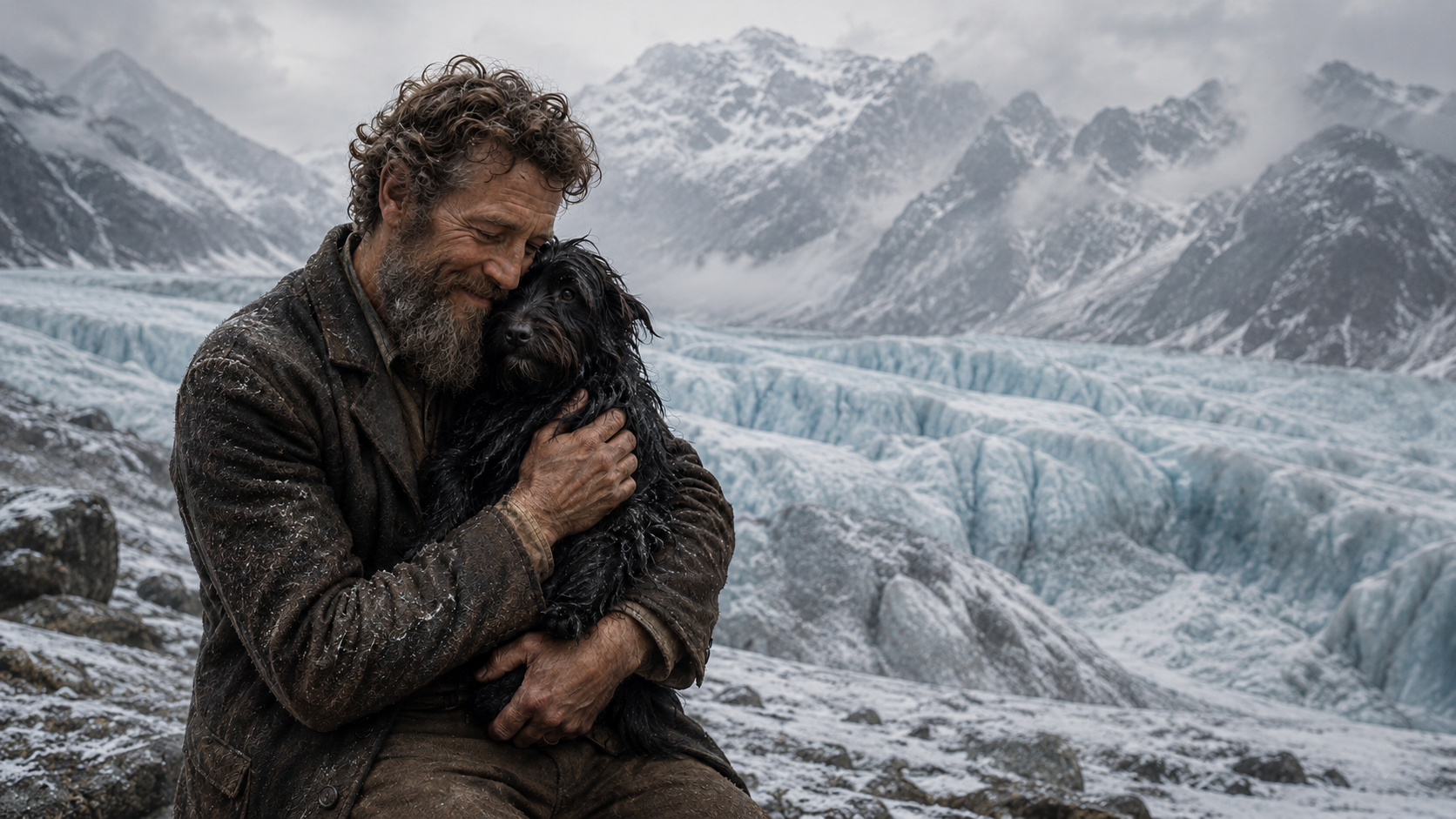
John Muir set out across an Alaskan glacier in 1880 with no intention of taking a dog. Stickeen came anyway.
The animal was small, quick, and independent. He belonged to the household of the missionary Samuel Hall Young, who was travelling with Muir’s party. According to Muir’s later account, the dog had already made a habit of following him on excursions. On this wet, dangerous day, Muir tried to send him back. Stickeen ignored the advice.
What followed became one of Muir’s best-known personal stories: a storm, a maze of crevasses, a narrow bridge of ice, and a terrified dog who had to decide whether to cross it. The ending is memorable not because Stickeen delivered a clever speech or performed a grand rescue. It is memorable because, once safe, he celebrated.
The episode is also a useful lesson in telling a true story responsibly. The historical frame is well documented. The US National Park Service places Muir’s second Alaska trip and his adventure with Stickeen in 1880. The dramatic details come from Muir’s own retrospective telling, published years later. We can enjoy the scene while being clear about whose memory carries us through it.
A companion who refused to stay behind
Muir was exploring the icy country of southeastern Alaska. The National Park Service chronology of his life records that his 1880 journey was his second trip to Alaska and specifically notes the Stickeen adventure. By then Muir was already an experienced traveller with an intense interest in glaciers.
In the opening of Stickeen, he described the dog as short-legged, long-haired, and hard to classify by breed. Stickeen was not Muir’s dog, and Muir initially treated him more as an unexpected fellow traveller than a beloved pet. That distance matters. The story is partly about a relationship changing under pressure.
On the morning of the adventure, the weather was poor and the rest of the party remained in camp. Muir went out to study the glacier. Stickeen followed. Muir’s warnings did not turn him around, so man and dog continued together into a landscape of rain, ice, and deep cracks.
The day’s problem grew slowly. Crevasses forced detours. Some could be jumped; others required Muir to cut footholds or flatten the sharp tops of narrow ice ridges so the dog could follow. As the light failed and snow began, returning to camp became a race against exposure.
The crossing Stickeen did not want to make
The hardest obstacle came near the end: a wide crevasse that could not be jumped. A slender piece of ice connected its sides below the rim. Muir decided it was their only usable route.
In his account, he cut steps down, straddled the narrow ice, and edged across. Then he climbed to the opposite side. Stickeen remained behind.
Until that moment, the little dog had followed over every difficulty. Now he appeared overwhelmed. Muir called and tried to encourage him. He briefly moved out of sight, hoping the dog would follow rather than be left alone. When he returned, Stickeen was still on the far side.
Finally, the dog began to descend. He placed his feet carefully in the steps Muir had cut, made his way onto the bridge, and crept across while wind swept the glacier. At the far wall, Muir prepared to help. Stickeen instead scrambled up the cut steps and reached safety himself.
This is where the survival story becomes a character story.
Muir recalled that Stickeen suddenly raced in circles, rolled, leapt, and dashed about in an outburst of energy. The dog who had been nearly immobilized by fear was now, in Muir’s interpretation, expressing sheer relief. We cannot know precisely what Stickeen felt. We can say that Muir observed and remembered a striking change in his behaviour—and chose that physical detail as the emotional climax.
A story remembered, revised, and preserved
Muir did not publish the book immediately after the journey. The University of the Pacific’s bibliographic record for the 1909 edition identifies Stickeen as a Houghton Mifflin publication and notes that another version later appeared in Travels in Alaska. A digitized 1909 copy from the University of California library lets readers consult the primary text rather than rely on a modern retelling.
There is earlier evidence of Muir shaping the memory, too. The University of the Pacific preserves a notebook dated to about 1887. On one transcribed notebook page, Muir worked through the scene’s meaning and recorded that, for months, he found himself back on the ice bridge as he went to sleep. He also noted the dog’s fear, the surge in courage after the crossing, and the deeper sympathy the ordeal stirred in him.
That notebook is valuable because it does not make the published story a minute-by-minute field report. It shows a writer returning to a powerful memory, selecting details, testing language, and considering what the event meant. The core adventure is documented, but its polished form was created through reflection.
This distinction need not spoil the story. It makes the memoir more interesting. Memory is not a surveillance camera. A responsible life writer can acknowledge uncertainty, check dates and places, compare notes with records, and still describe what an event felt like from the inside.
Why the little dance stays with us
A summary could reduce Muir’s story to one sentence: a man and a dog crossed a dangerous glacier and returned safely. Accurate, perhaps—but forgettable.
The remembered gestures give it life. Stickeen refuses to turn back. He follows closely as conditions worsen. He stops at the one crossing that finally frightens him. Then, once across, he erupts into motion.
For memoir writers, that sequence offers a practical technique: when you reach the emotional centre of a story, look for an observable action. Instead of writing only “we were relieved,” remember what relief did to the body. Did someone laugh at the wrong moment? Sit down on the floor? Check the locked door twice? Make tea for everyone without asking? Hug a dog with wet fur?
Small actions can carry large feelings without exaggeration. They also help a reader see the scene rather than being told what to feel.
Try these prompts with one memory of danger, uncertainty, or sudden good news:
- What did each person do immediately before the turning point?
- Who hesitated, and how could you see it?
- What was the first physical sign that the danger had passed?
- Which detail did you repeat when you later told the story?
- What part comes from your own observation, and what part did someone tell you afterward?
That last question protects the truth of the account. If your father supplied the punchline years later, say so. If two siblings remember the weather differently, preserve both versions. If a diary confirms the date but not the conversation, do not manufacture dialogue. Clear attribution strengthens a family story; it does not weaken it.
Preserve the event—and the change it caused
Muir’s story is not only about getting across an ice bridge. Before the crossing, Stickeen was an intriguing but somewhat aloof camp companion. Afterward, Muir saw him differently. Shared danger had revealed fear, courage, and trust.
Many personal stories have the same deeper shape. Something happens, but more importantly, a relationship changes. We understand a neighbour’s quiet kindness. We see a parent become vulnerable. We discover that a child is braver than expected. The external event supplies the plot; the changed understanding gives the memory its meaning.
When you preserve such a story, record both. Establish what happened, where, and when. Then describe the small gesture that changed how you saw someone. That may be the detail your family remembers long after the larger circumstances have faded.
At Memory Share, we believe your story matters to us. You do not need a glacier or a famous name. Begin with one moment when a person—or an animal—surprised you. Verify what you can, identify what you remember, and save the gesture that made the experience unforgettable.
Sources and further reading
- John Muir timeline — John Muir National Historic Site, National Park Service
- Stickeen (1909) — digitized University of California library copy at Internet Archive
- Stickeen bibliographic record — University of the Pacific
- John Muir’s circa-1887 Stickeen notebook, image 30 and transcription — University of the Pacific
Your story is worth preserving too.
Create and preserve your memories. Write them, record them by voice, and add photos when you are ready.
Preserve your memoriesReactions
Comments
No comments yet.