Blog

Articles about memoir writing, family stories, and memory preservation.

The Flight Eleanor Roosevelt Took at Tuskegee
September 29, 2026

The Flight Eleanor Roosevelt Took at Tuskegee

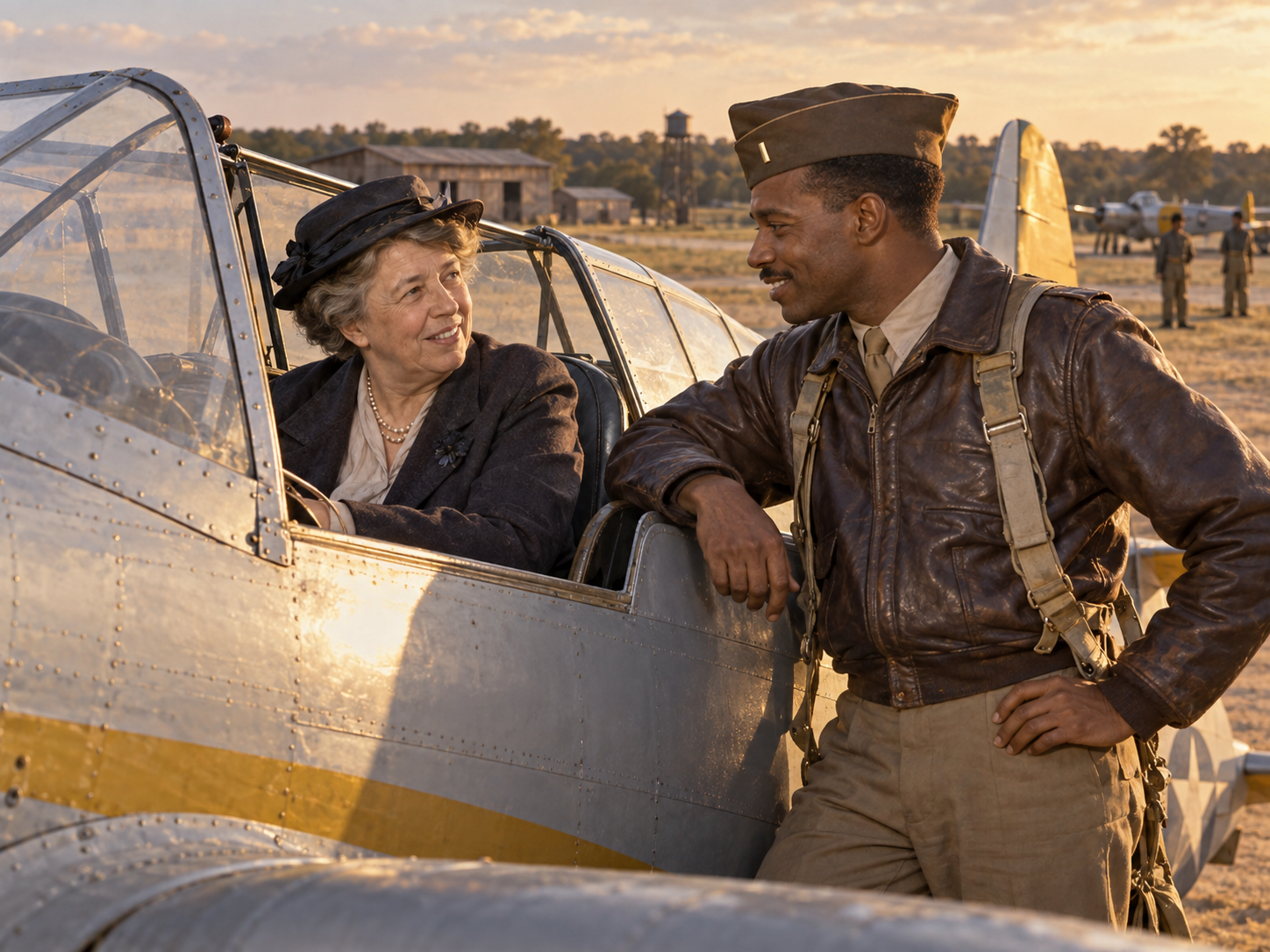
Eleanor Roosevelt’s 1941 visit to Tuskegee Institute included a flight with Charles A. Anderson, the school’s chief civilian flight instructor. Roosevelt’s own *My Day* column records the simple pleasure of seeing the Alabama countryside from a tiny training plane, while federal archival records preserve a photograph of her with Anderson after the flight. The episode matters because it joins a personal experience to a public purpose: Roosevelt chose to be photographed with a Black pilot at a time when racist assumptions challenged Black Americans’ ability to fly. The article also corrects the familiar oversimplification that one flight created the Tuskegee Airmen. For family storytellers, the lesson is practical: preserve the image, names, date, place, firsthand account, and uncertainties together. Context turns a memorable photograph into a trustworthy life story....
Write the Sound of a Place Into Your Memoir
September 28, 2026

Write the Sound of a Place Into Your Memoir

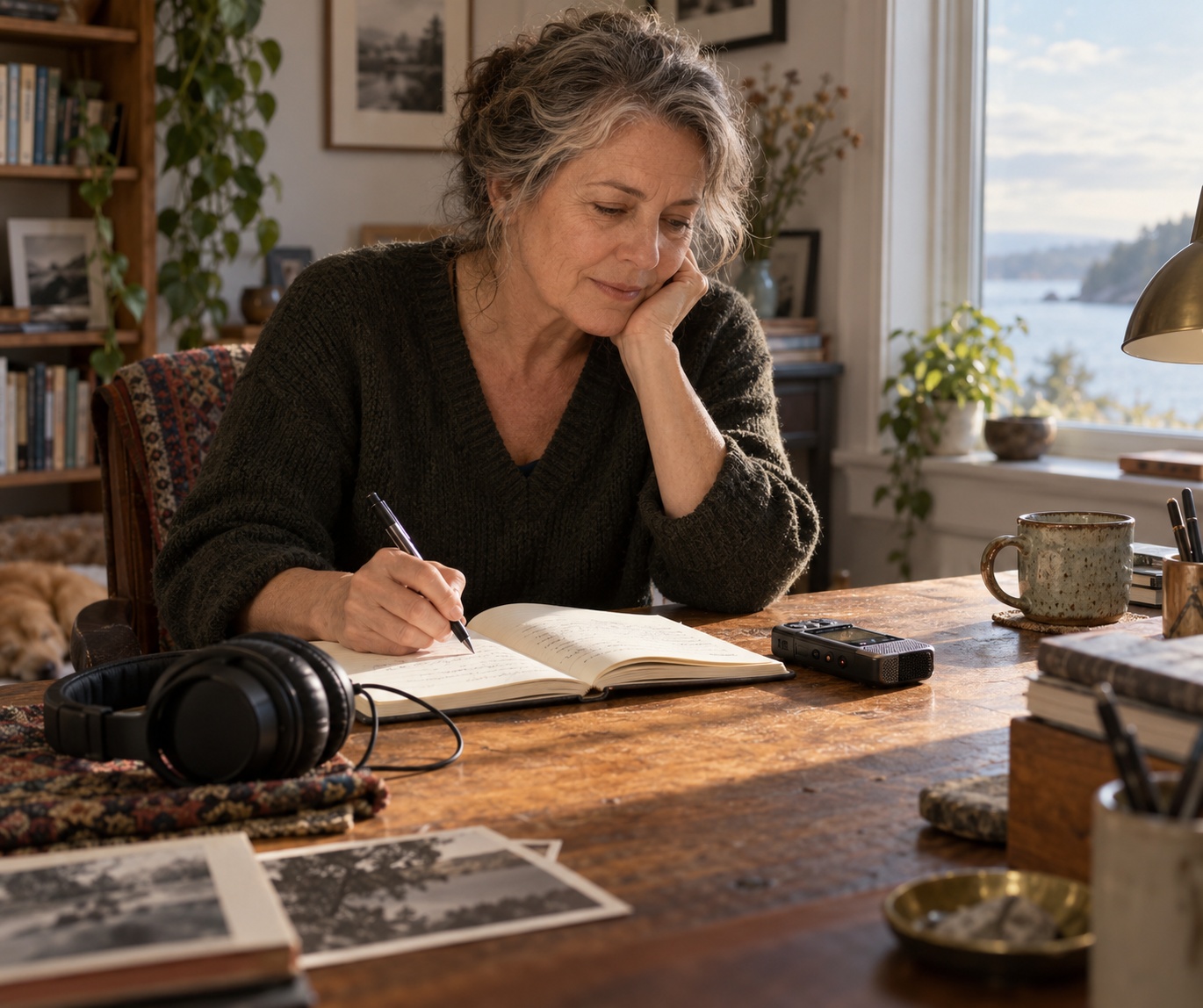
Sound can be a practical doorway into memoir when visual memories feel incomplete. This guide shows writers how to choose one bounded place, identify a remembered sound, and build a four-part sound inventory that separates direct recollection from later knowledge and uncertainty. A five-beat sequence helps turn scattered impressions into a scene, while careful treatment of remembered dialogue prevents invented precision. The article also explains how to invite a relative’s version through open questions, obtain consent before recording, label and back up an audio file, and protect the original. The central exercise is simple: choose one place, list five sounds, describe what followed the sound you remember best, and add present-day reflection only after the scene is drafted....

The Little Birthday Book That Carried a Family Across the World
September 27, 2026

The Little Birthday Book That Carried a Family Across the World

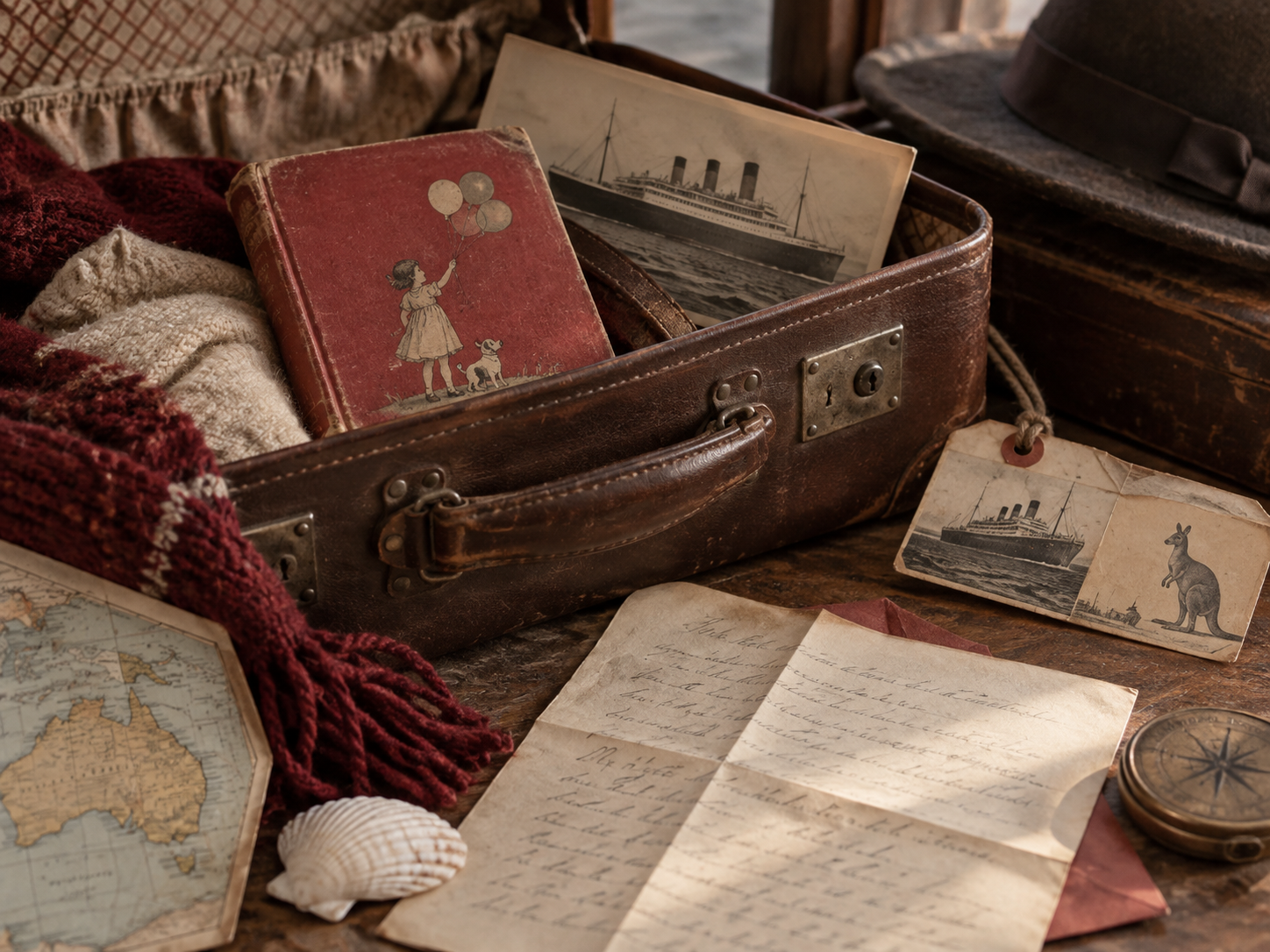
Victorian and twentieth-century birthday books were more than calendars. Their dated pages gave families a place to record names, addresses, verses, and reminders, creating small social maps that could survive long after the original owner was gone. Museum collections show how these objects connected famous acquaintances, childhood gifts, and migration journeys. One 1943 birthday book in the Museums Victoria collection travelled with Mary Ward from England to Australia in 1961, carrying a gift inscription and family dates across the move. The practical lesson is simple: when you find a family calendar, preserve the object, transcribe its entries, and ask who each person was. Keep documented facts, remembered explanations, and uncertain identifications clearly separate. An ordinary date may be the doorway to a much larger family story....

Did You Know John F. Kennedy Left Doodles in the Archives?
September 26, 2026

Did You Know John F. Kennedy Left Doodles in the Archives?

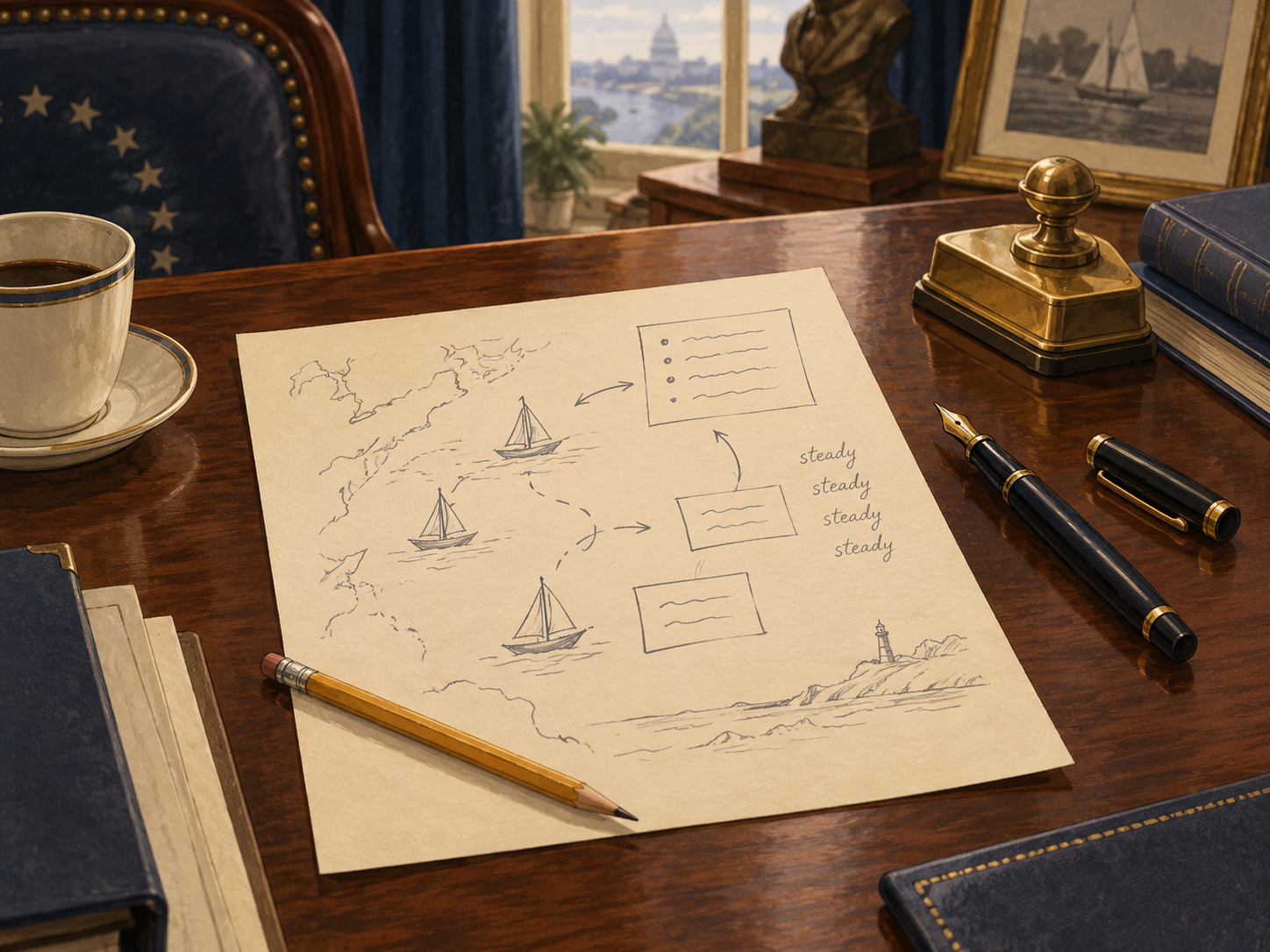
The John F. Kennedy Presidential Library preserves more than one hundred folders of Kennedy’s doodles: boxes, arrows, sailboats, repeated words, and other small marks made alongside the official record. One page from a 1962 cabinet meeting contains the word “cheese” twice. The meeting agenda explains some nearby words, but the archivist says the reason for “cheese” may never be known. That careful uncertainty is the real lesson. When preserving a family note, recipe margin, photograph, or scrap of paper, record what the item shows, add the context that can be supported, and label interpretations as interpretations. An unanswered question can be as valuable as an answer because it invites another relative to contribute. Small traces, honestly described, can make a life more recognizable across generations....

Before the Bus: The Childhood Story Rosa Parks Wrote Down
September 25, 2026

Before the Bus: The Childhood Story Rosa Parks Wrote Down

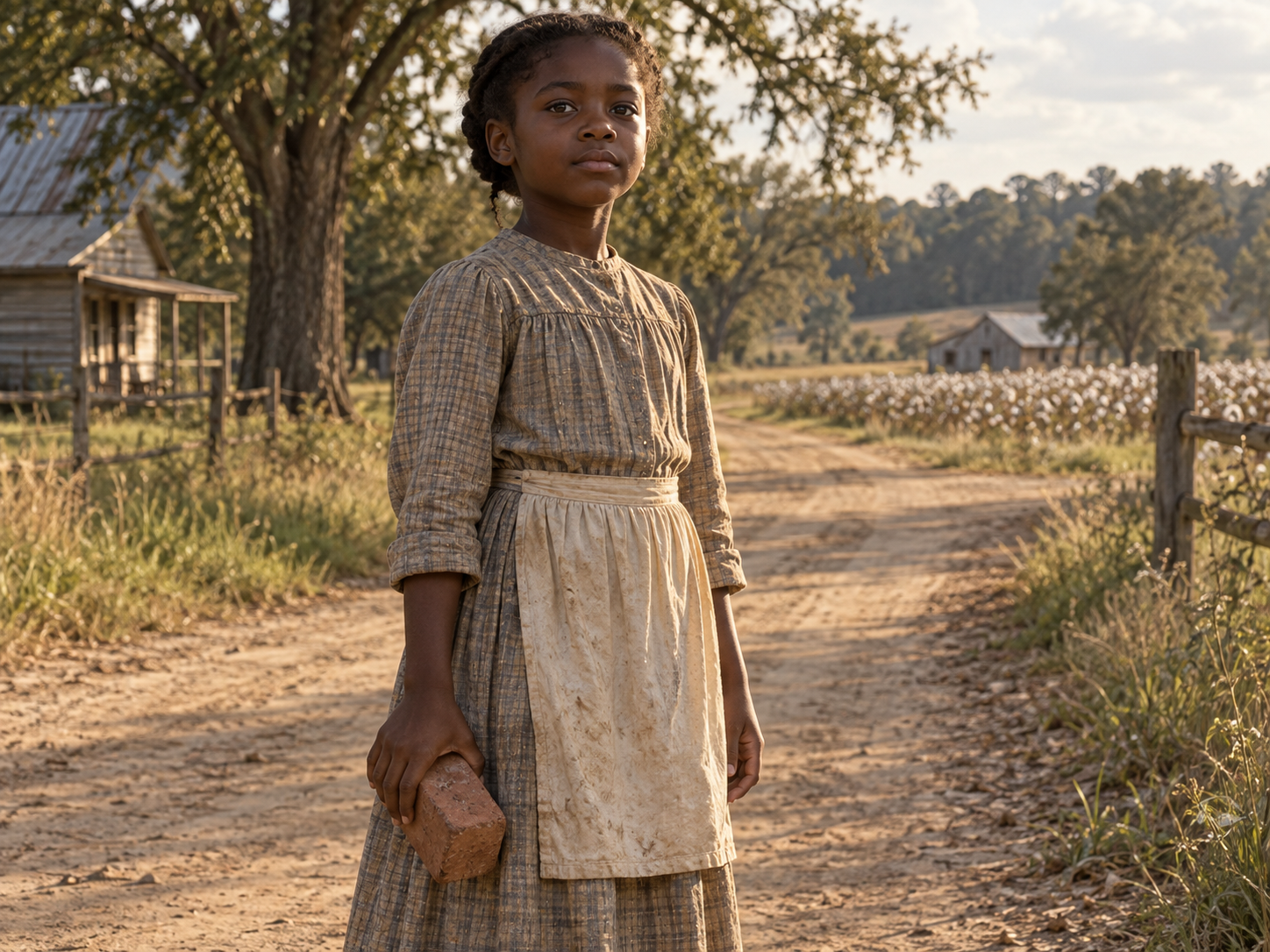
In a later autobiographical manuscript, Rosa Parks recalled a childhood encounter with a white boy who threatened to hit her. She wrote that she picked up a brick and dared him to try; he backed away. The Library of Congress preserves this account and identifies it as a retrospective manuscript, not a contemporaneous report. That distinction makes the story more useful, not less: it shows how a person can preserve an early memory while acknowledging the limits of what later recollection can prove. Parks also connected the moment to her grandfather’s teaching not to accept mistreatment. For family memoirists, the lesson is practical: save the small action, the object, the influential relative, and the source’s date. A vivid scene becomes trustworthy when we distinguish what was witnessed, remembered, inherited, and still uncertain....

Ask About the First Job: The Family Story Behind the Job Title
September 24, 2026

Ask About the First Job: The Family Story Behind the Job Title

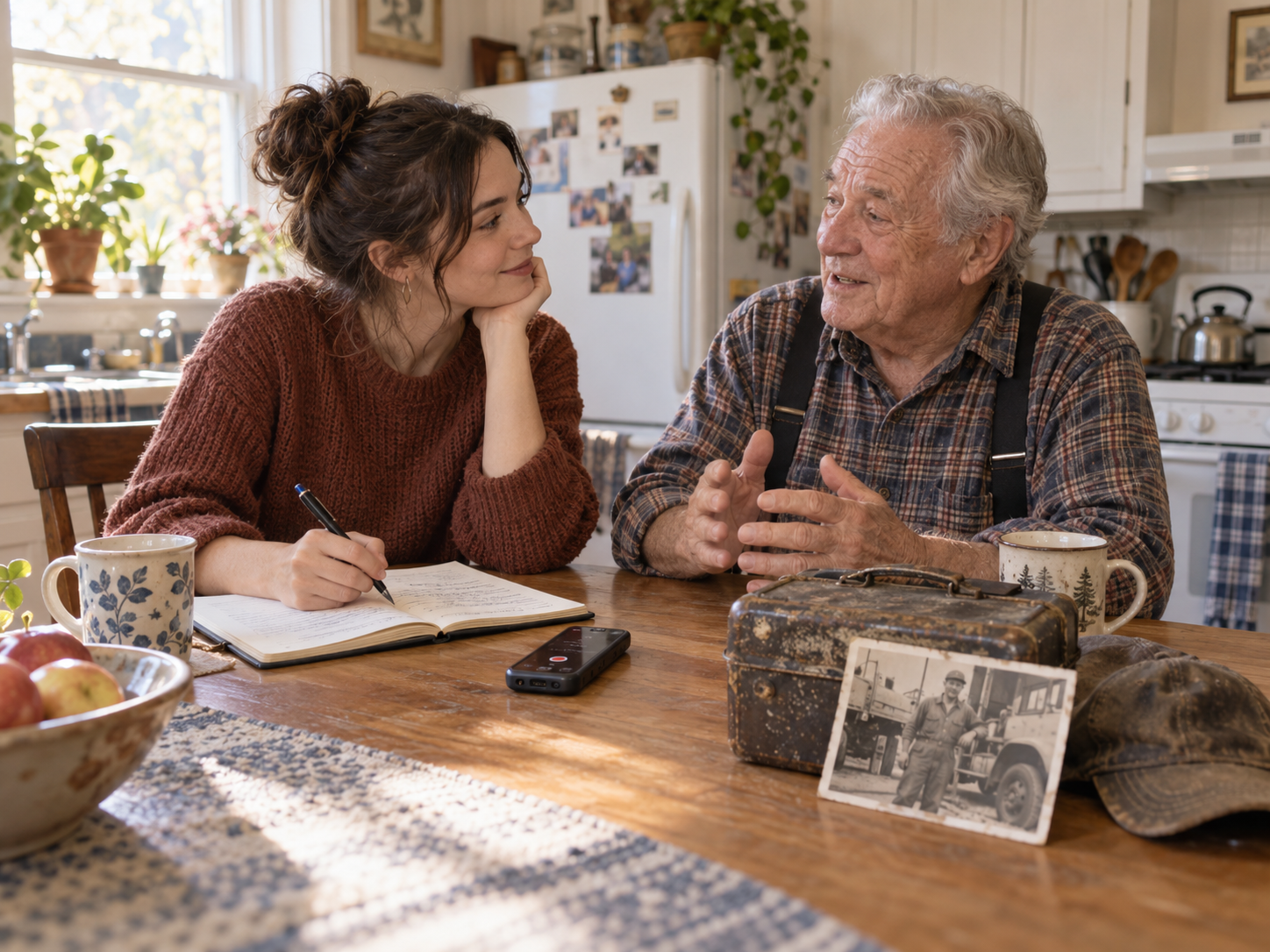
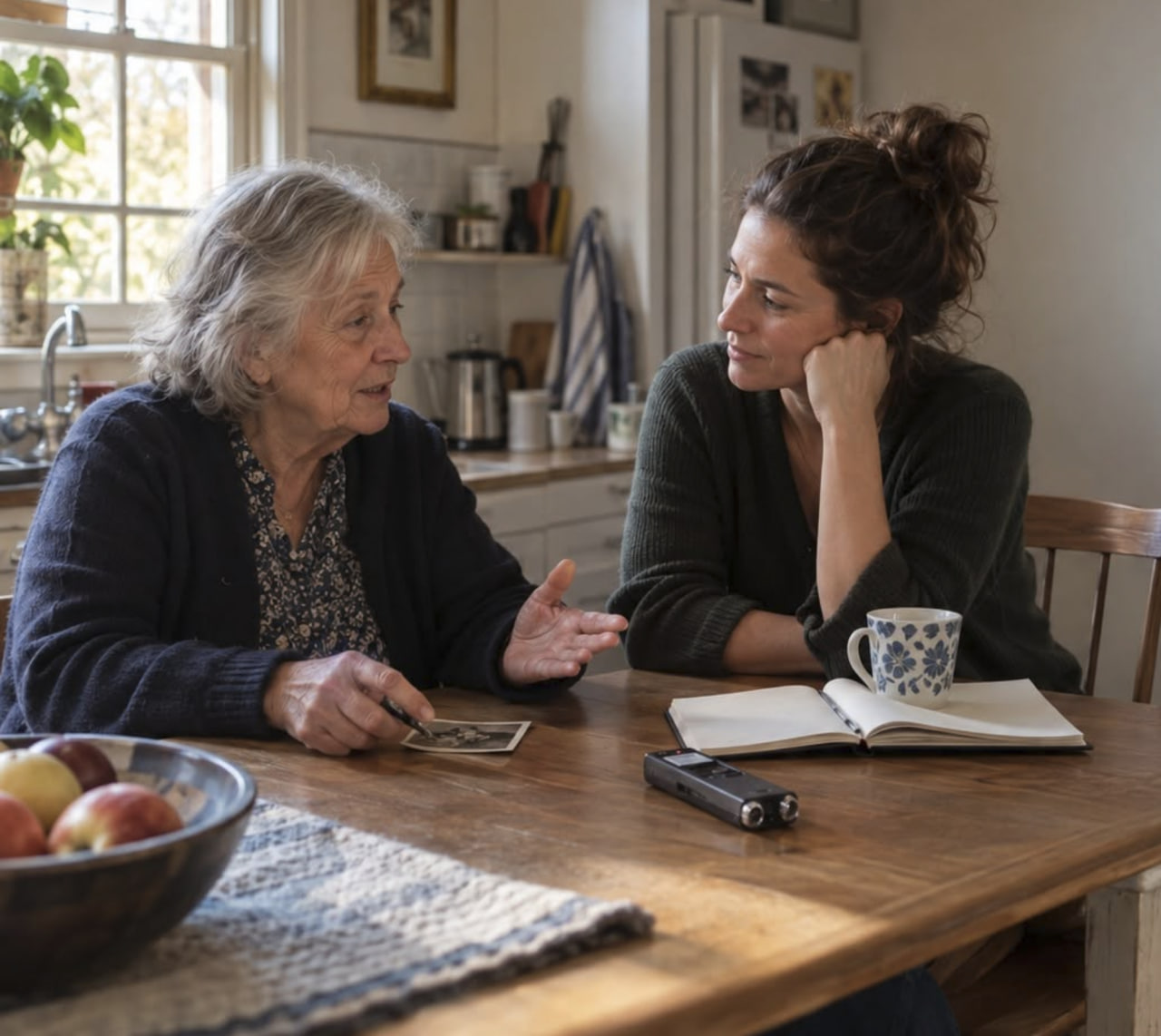
Asking a parent or grandparent about a first job can reveal the person behind a familiar family role. A job title leaves out the route to the workplace, the ordinary workday, the people who taught the new worker, the sensory details, the first paycheque, and the lessons that lasted. This guide offers a respectful two-generation interview: ask permission, explain how the recording will be used, invite an open-ended account, follow the people and routines, and separate remembered details from documents and uncertainty. The practical takeaway is simple: choose one relative, set aside a comfortable twenty minutes, and record one first-job story in the speaker’s own voice. A Memory Share subscription can make the invitation easier when it is paired with time, listening, and a promise to review the saved story together....

Write the Note Your Future Reader Will Need
September 23, 2026

Write the Note Your Future Reader Will Need

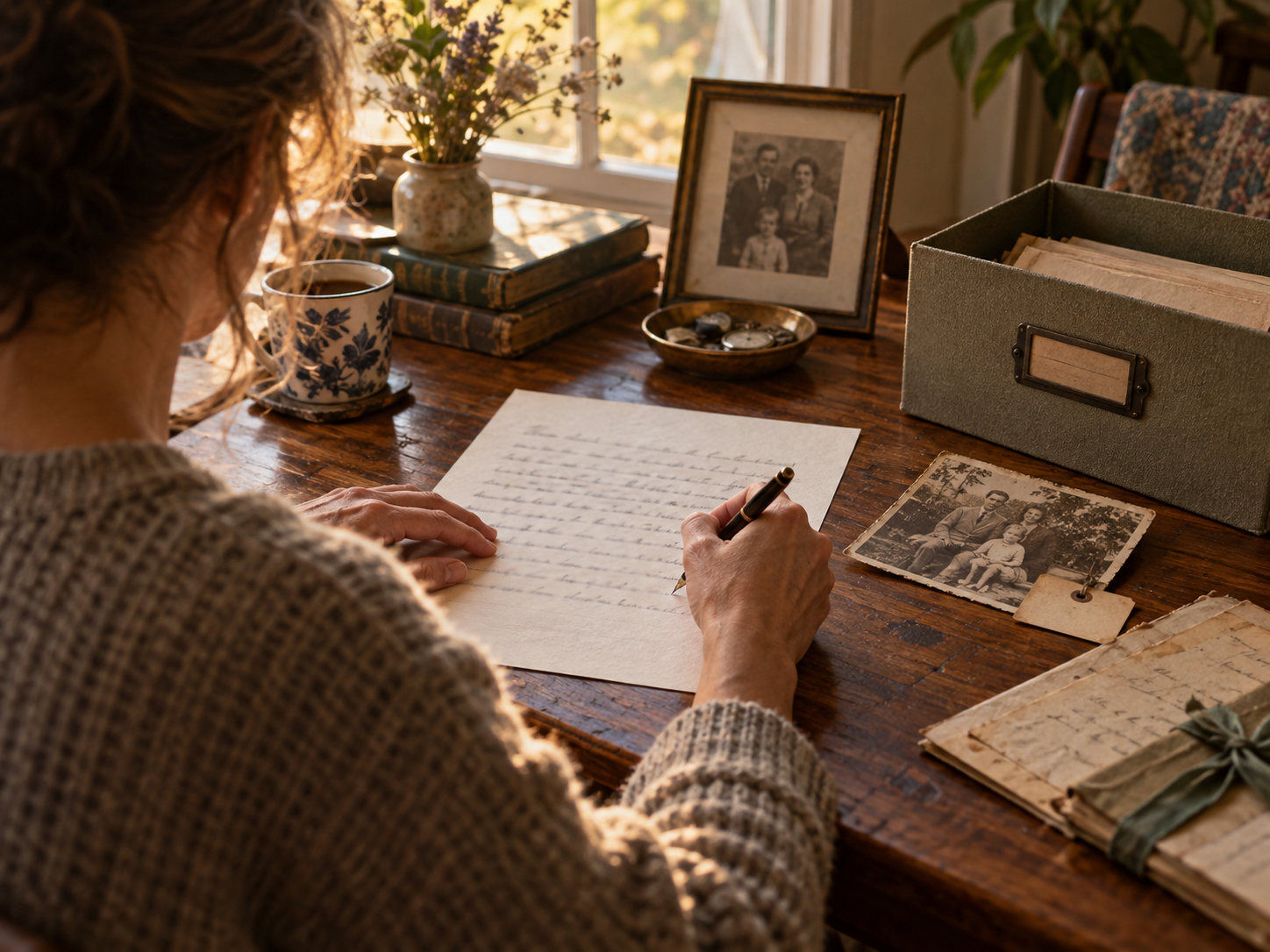
Writing for a future reader is a gentle way to preserve more than the event itself. Choose one bounded memory, give it an approximate date and place, then explain what happened, what a visitor would have noticed, who was involved, and what the moment means to you now. Separate direct recollection from later interpretation, hearsay, and unanswered questions. Add the context that a photograph, object, or official record cannot carry on its own: nicknames, household rules, routines, missing people, and why an ordinary item mattered. Finish with a short handoff inviting a future reader to add, correct, or compare their own version. The result is not a polished legend but a useful, honest piece of family history....

Robert Louis Stevenson and the Donkey Who Would Not Hurry
September 22, 2026

Robert Louis Stevenson and the Donkey Who Would Not Hurry

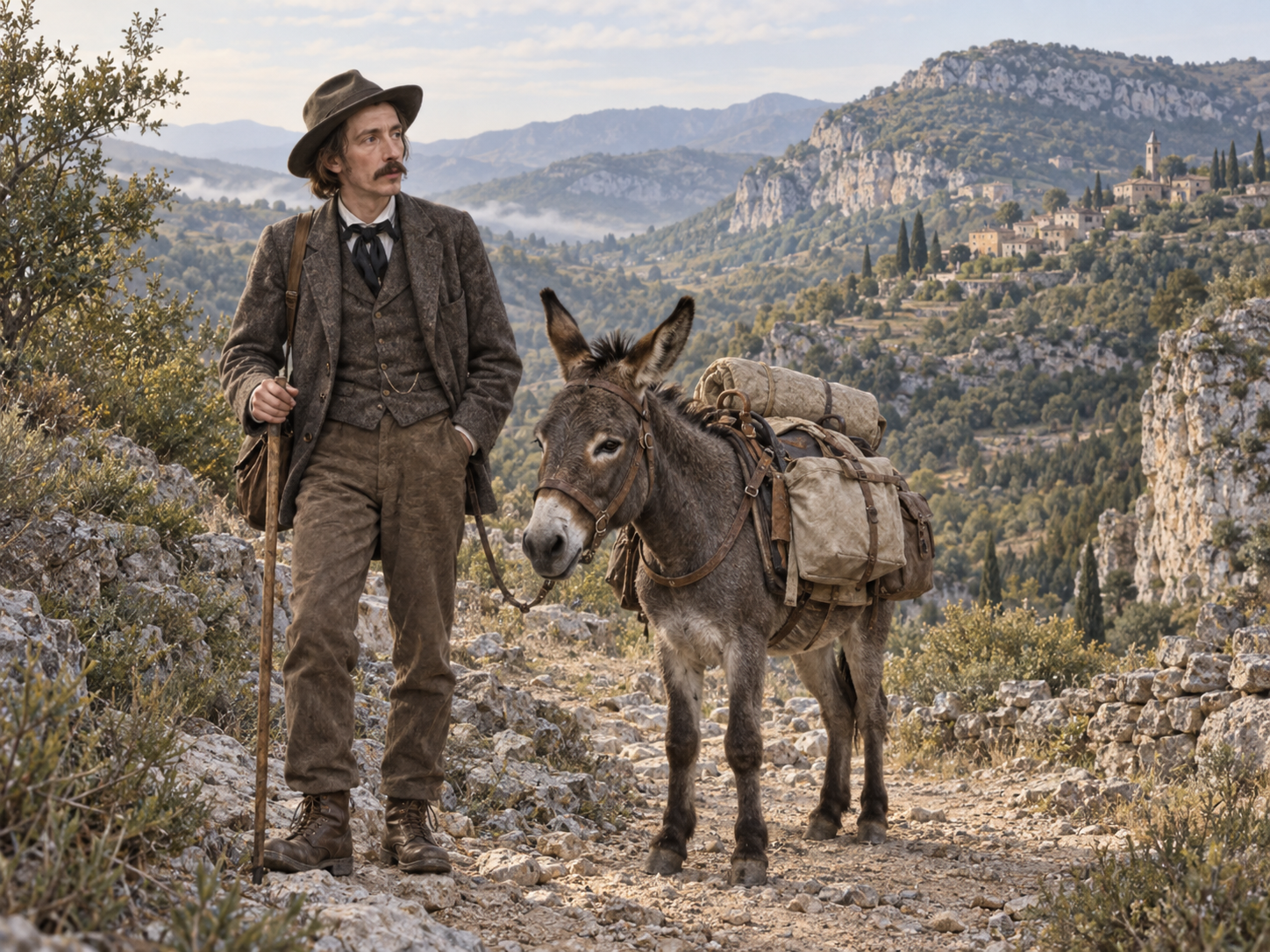
Robert Louis Stevenson’s *Travels with a Donkey in the Cévennes* preserves a wonderfully human travel problem: his small donkey, Modestine, would not match his preferred pace. Stevenson’s own 1879 narrative records the slow progress, repeated stopping, practical frustrations, and eventual affection that grew during their twelve-day journey. When Modestine had to be sold, the companion he had treated as an obstacle suddenly became the part of the trip he missed. The story offers a useful memoir lesson. Keep the inconvenience, the repeated behaviour, and the emotional reversal. Identify what comes from a record and what comes from later interpretation, and do not turn approximate dialogue into a quotation. Often the detail that complicated a family plan is the detail future readers most want to remember....

Write the Scene You Remember—Then Mark What You Don’t
September 21, 2026

Write the Scene You Remember—Then Mark What You Don’t

A partial memory can still become a strong memoir scene. This practical guide introduces a four-column scene inventory: what happened, what you directly remember, what you may be inferring, and what remains unknown. It then shows how to build a draft from physical actions, handle remembered dialogue without false precision, and ask relatives open questions rather than leading them toward your version. The method keeps uncertainty visible while giving a fragment shape and movement. Readers are encouraged to separate the experience as it felt then from the meaning they make of it now, and to seek consent before recording or publishing another person’s story. Begin with one bounded moment, three honest actions, and one question....

Need Help?
Hello! How can we assist you today?